
Offense Is the Best Defense: Why Ethical Hackers Are the New Security Leaders

For decades, cybersecurity was about defense. Build walls, monitor traffic, stop intrusions and a constant game of reaction. But in 2025, that strategy isn’t enough. The battlefield has changed. Cyberattacks today are faster, automated, and AI-powered striking before teams even know they’re under threat. That’s why a new kind of professional is leading the charge of ethical hackers. They don’t just defend networks, they attack them first to find weaknesses before real criminals do. This shift from reactive defense to proactive offense is reshaping the cybersecurity world. And it’s creating one of the most in-demand, future-proof career paths of the decade. How Cyberattacks Have Evolved Cyberattacks used to be predictable: a phishing email here, a virus there. But those days are long gone. Today’s threats are dynamic, invisible, and coordinated. Ransomware groups now operate like businesses, offering “attack kits” to anyone willing to pay. Deepfake voice scams are tricking CEOs into transferring millions. AI-driven malware can rewrite its code to evade detection. According to (ISC)², there’s a global shortage of over 4 million cybersecurity professionals and organizations are scrambling to fill the gap. In India alone, the demand for ethical hackers has grown by over 40% year-on-year as businesses digitize faster than ever. The result? Companies don’t just need people who can respond to cyberattacks, they need experts who can anticipate and outsmart them. What “Offensive Security” Really Means The phrase offensive security may sound aggressive, but in cybersecurity, it’s a smart, ethical, and strategic practice. Instead of simply waiting to detect attacks, offensive cybersecurity involves simulating real-world hacks to test how strong an organization’s defenses truly are. This is where the concept of Red Teaming comes in. In simple terms: The Red Team plays the attacker — attempting to breach systems using real hacking techniques. The Blue Team defends, monitors, and mitigates. The Purple Team bridges the gap — learning from both sides to strengthen strategy. This process helps organizations understand their blind spots and strengthen weak links before cybercriminals exploit them. Companies like Google, Microsoft, and even government agencies now employ dedicated red teams that conduct mock cyber wars not for chaos, but for preparedness. And that’s exactly the mindset the next generation of cybersecurity leaders need to master. The Mindset of an Ethical Hacker Becoming an ethical hacker isn’t just about learning tools it’s about developing a mindset. An ethical hacker thinks like a criminal, acts like a detective, and protects like a strategist. They ask questions that most people overlook: Where could this system break? If I were the attacker, what would I target first? How fast could I detect and fix the breach? They see patterns others miss. They explore vulnerabilities not to exploit, but to strengthen. What sets them apart is curiosity. They experiment, fail, and learn building intuition around how digital systems behave under pressure. And that curiosity pays off with cybersecurity salaries averaging ₹6–12 LPA for entry-level roles and rapidly scaling beyond ₹20 LPA for skilled ethical hackers in India. But more importantly, ethical hackers are emerging as decision-makers. They advise on risk frameworks, conduct audits, and build long-term security roadmaps leading organizations from the front. Inside the Red Team Advantage Modern cybersecurity learning isn’t theoretical anymore. It’s hands-on, live, and simulation-driven. Red Team Operator training programs like those offered by leading institutes immerse learners in real-world attack labs where they: Simulate breaches in controlled environments. Learn tools like Metasploit, Burp Suite, Wireshark, and Nmap. Conduct vulnerability assessments and penetration testing (VAPT). Execute phishing simulations, network exploits, and privilege escalations ethically. Collaborate in red vs. blue scenarios that mirror enterprise-scale operations. This blend of technical precision and strategic foresight creates professionals who can both break and build the ultimate skillset in modern cybersecurity. Offensive training isn’t about chaos; it’s about control through understanding. Once you learn how attackers think, you become ten times better at defense. From Defenders to Leaders The shift toward offensive cybersecurity isn’t just a skill trend, it’s a leadership evolution. Tomorrow’s Chief Information Security Officers (CISOs) and cybersecurity consultants will come from offensive security backgrounds, because they understand every angle of the threat landscape. They don’t rely on dashboards or alerts; they design systems that are inherently resilient. They don’t wait for a breach, they simulate one before it happens. This proactive, predictive approach is transforming how businesses approach digital trust. In a world where every company is a tech company, cybersecurity isn’t just IT it’s strategy. The Future Belongs to the Proactive Cybersecurity isn’t just about protection anymore. It’s about anticipation. AI, automation, and connected systems have created a new kind of battlefield one that rewards those who can think two steps ahead. Ethical hackers, red team operators, and cybersecurity analysts who adopt this offensive mindset are becoming the new security leaders shaping not just how systems are defended, but how they are designed. In 2025 and beyond, the best cybersecurity professionals won’t be the ones who react to attacks. They’ll be the ones who saw them coming. Because in the digital world, offense truly is the best defense.
The Next-Gen Agentic Development Platform Developers Have Been Awaiting: Google’s Antigravity IDE
There is no doubt that the software development industry is undergoing a rapid transformation, and Google has explicitly declared that it has a place in the competition for state-of-the-art AI coding tools by introducing Antigravity Google. A powerful new agentic development platform for front-end engineers, full-stack developers, and professional developers is presented as Google Antigravity. This integrated development environment (IDE) is not only a competitor to Visual Studio Code but also encompasses Google’s concept of the “agent-first” epoch in which smart AI agents will be cooperating with developers, performing tasks that are normally done by humans, and producing applications that are deployment-ready in a much shorter time than before. Antigravity enables developers of all skill levels to utilize advanced, smooth, and efficient coding tools. And the best part? It is entirely free of charge. What Is Google Antigravity? Google Antigravity is an advanced IDE specifically for building agentic AI, that is, it is designed to be used for the development of agents by giving them some form of autonomy or control. It features: AI-powered coding agents Control centers Real-time user interface integration Browser-based feedback loops Support for full-stack, front-end, and professional workflows Think of it in the way of the evolution of traditional IDEs like VS Code, Cursor, or JetBrains, but now with AI agents co-working with you for coding, debugging, and task management purposes. Important Features and Highlights Ultimate IDE for Agentic AI In a confident turn, Google brings Antigravity as a competitor to IDEs like VS Code and Cursor: Agents’ Mission Management Through Antigravity’s mission control surface, developers are able to: Watch agents that work in the background Perform automatic code evaluation Give out tasks and track outcomes Reduce manual work significantly The process of coding is more like leading a group rather than doing the dirty work since agents take care of the boring job while you deal with logic, architecture, and creativity. Utilizing Google’s Gemini Models The most recent AI models from Google, Gemini 3 and Gemini 5, significantly enhance: performance speed logic Long-context coding handling tasks in multiple steps Antigravity is a sophisticated AI-powered IDE for developers that makes extensive use of these models. Decreased Context Switching Rather than switching between documents, tabs in a browser, and editors, Antigravity: streamlines processes in parallel controls knowledge inside the IDE permits agents to operate “behind the scenes.” This helps developers stay focused and saves time. Google Provides Free Advanced Tools Among the greatest surprises? Google is providing robust AI tools at no cost, such as: Gemini 3 Pro Code in the Cloud Tools for real-time UI feedback Antigravity is therefore perfect for students Novices Independent developers Startups Anyone interested in learning without having to pay a subscription fee Integration of Real-Time UI Changes are instantly visible to developers in the browser, which greatly enhances: UI design front-end processes troubleshooting user interactions Different Modes of Development Agent-driven development, in which agents do the majority of the work. Agent-assisted development: you maintain control while receiving AI assistance A Well-Known, Developer-Friendly Interface For developers accustomed to Visual Studio Code, Google Antigravity’s interface is comfortable. Among the features are: Explorer for files Support for multiple projects Chat panel for agents Templates for projects Rich code editor Advanced features in a free version The most impressive part, perhaps? A chat-style agent is integrated right into the IDE. This implies: obtain inline recommendations Request clarifications Request reviews of the code Create tests right away Strong Coding Agents With Inline Editing Antigravity’s coding agents are capable of much more than just producing snippets. They provide: inline editing management of tasks Suggestions for improvement directed changes to the code Orchestration of multiple agents This makes the coding environment more structured and expert, particularly for: ongoing projects deep research assignments cooperative processes Support for Extensions For instance, the Python extension Python tools for Microsoft Additional language integration Due to this, Antigravity can be utilized in a variety of programming environments. Support for Python and Quick Setup Installing Python within Antigravity enables you to: Execute code immediately control dependencies quickly create backend systems Extra advantages include a familiar terminal interface (like GitHub Copilot). quick project creation smooth code committing execution of commands in real time Constructing a FastAPI Calculator as a Basic Example The video shows how simple it is to use FastAPI to create an application. Highlights of the process: start a new project. Create several backend routes. launch the development server. Test in the browser right away. FastAPI is renowned for its speed. contemporary style async capabilities experience with clean development This example demonstrates how quickly full-stack apps can be developed within Antigravity. Although it’s not flawless yet, the user interface is quick, easy to use, and developer-friendly. The Significance of Google Antigravity Antigravity is marketed by Google as a professional-level AI IDE. An agent-first development platform An environment in which humans and AI agents co-code A complimentary toolkit when rivals are compensated This makes advanced development accessible to everyone and democratizes powerful tools. Conclusion Google Antigravity is the beginning of a new era in software development, not just an IDE. An era in which developers and agents work together Coding gets smarter and faster. Real-time UI feedback Workflows are optimized Tools are available and free. This is one of the most crucial AI-powered IDEs to investigate in 2025, regardless of your level of experience as an engineer.
The Cybersecurity Talent Gap: Why Now Is the Best Time to Enter the Field
Every time you read about a data breach, ransomware attack, or phishing scam, there’s one question behind the headlines that rarely gets asked: Who’s protecting the systems behind the screen? The truth is not enough people. As cyber threats surge across industries, the world is facing a massive shortage of trained cybersecurity professionals. And for anyone considering a future-proof, high-growth tech career, that shortage is actually an opportunity waiting to be claimed. The State of Cybersecurity Hiring in 2025 In 2025, the global cybersecurity workforce gap crossed 4 million professionals (according to the ISC² Cybersecurity Workforce Study). India alone needs over 500,000 trained cybersecurity experts to meet its rising digital security demands. This surge isn’t theoretical. Every new fintech app, digital bank, AI startup, and cloud-based enterprise creates new vulnerabilities and a need for someone who can protect them. Cybersecurity has moved from being an IT niche to a national priority. In fact: India’s cybersecurity market is projected to reach ₹70,000 crore by 2030 (source: NASSCOM). The average salary of a cybersecurity analyst has grown by over 25% in the past three years. Entry-level roles start at ₹5–7 LPA, while experienced professionals can earn ₹20–30 LPA+, depending on specialization. The demand is so high that, globally, for every two cybersecurity roles, only one qualified person exists. That means if you start now, you’re entering an industry actively looking for you. Why Companies Can’t Find the Right Talent It’s not that graduates aren’t interested in cybersecurity, it’s that most aren’t job-ready. Traditional IT programs focus heavily on theory, network layers, encryption algorithms, security protocols but rarely on what actually happens during a cyberattack or how to defend in real-time. Recruiters today face a dilemma: thousands of applicants, but very few who can: Identify and mitigate real vulnerabilities. Work with ethical hacking and penetration testing tools. Analyze logs and detect anomalies. Respond to live incidents or simulate attacks. In cybersecurity, knowledge isn’t enough. You need hands-on experience, the kind that comes from labs, simulations, and guided mentorship. What Skills Make You Employable in Cyber Roles Employers aren’t just looking for “ethical hackers.” They need professionals who understand systems end-to-end and can think like attackers to defend like experts. Some of the most in-demand cybersecurity skills in 2025 include: Network Security & Firewalls – Protecting systems from unauthorized access. Penetration Testing – Simulating real attacks to find vulnerabilities before hackers do. Incident Response – Managing breaches, tracing intrusions, and minimizing damage. Cloud & Application Security – Securing SaaS, AWS, and enterprise applications. Security Operations (SOC) Monitoring – Detecting threats in real time. AI & Automation in Security – Using AI tools for predictive threat analysis and rapid detection. And the best part? You don’t need to be a coder to start. With structured learning and guided labs, anyone with analytical thinking and curiosity can build these skills from scratch. How UpskillNexus Builds Industry-Ready Professionals At UpskillNexus, the goal is clear to turn learners into industry-ready cybersecurity professionals. The cybersecurity program is built on three pillars: Practical Labs Over Lectures – Every learner practices in simulated environments where real-world attack and defense scenarios unfold. Mentorship from Industry Experts – Learners train under professionals who’ve worked in network security, ethical hacking, and digital forensics. Employability-Focused Training – Beyond tools, students learn how to present findings, report vulnerabilities, and handle client security audits. From ethical hacking and SOC analysis to cloud defense and cyber law, each module blends theory with real implementation. By the end of the course, learners graduate with a portfolio of solved lab challenges, incident response case studies, and the confidence to handle live security systems. This hands-on foundation is what recruiters now prioritize over traditional degrees. Why Now Is the Best Time to Enter Cybersecurity isn’t just another tech trend, it’s the backbone of the digital economy. With businesses scaling online, AI reshaping security patterns, and personal data becoming the new currency, cyber professionals are now as critical as developers and data scientists. And because the industry is still short on skilled talent, the window for early movers is wide open. Starting today means you’ll be part of the generation that defines the next decade of digital safety not just adapting to change, but leading it. The cybersecurity talent gap isn’t just a statistic. It’s an invitation. An invitation to learn, to build, and to protect. If you’ve ever wanted a career that blends logic, purpose, and global relevance this is the one. Because while everyone talks about the next big cyberattack, very few are trained to stop it.The question is will you be among them?
From Clicks to Careers: How Real Digital Marketing Projects Build Employability

Every digital marketer remembers their first campaign, the one that finally worked. You tweak an ad, test a new audience, adjust the creative, and suddenly, the clicks start turning into conversions. That’s the moment when theory turns into confidence. And in today’s competitive digital world, that shift from knowing to doing is what employers truly value. Digital marketing is no longer just a skillset; it’s a performance field. Companies, startups, and clients are looking for professionals who’ve run real campaigns, not just learned about them. Why Employers Don’t Hire “Course-Only” Candidates A certificate is great but it’s no longer enough. Recruiters today aren’t impressed by a list of tools or jargon. They want to see impact. When you apply for a digital marketing job, one of the first questions you’ll hear is: “Can you show me the campaigns you’ve worked on?” That’s where many learners stumble. They’ve attended webinars, completed modules, and read endless blogs but they’ve never touched a real campaign or managed a client brief. Employers aren’t hiring for potential; they’re hiring for proof. They’re looking for candidates who can: Plan and execute a real marketing strategy. Interpret analytics and improve ROI. Manage budgets and deadlines under pressure. Communicate results clearly to clients or managers. Without real-world experience, even the most advanced course remains just theory. How Live Projects Build Real Confidence Running live campaigns changes everything. When you manage ad spend, monitor analytics, and make real-time decisions, you develop not just technical skills but also judgment, adaptability, and confidence. It teaches you to: Take ownership of performance, not just participation. See marketing as a system from research to reporting. Respond quickly to what the data says, not what a textbook predicts. The first time you launch a paid ad, track conversions, or optimize engagement, you begin to understand how digital marketing actually works in motion. That experience becomes your professional foundation, something no theory can replicate. When Classroom Campaigns Become Career Stories Across the industry, we’re seeing more institutes, mentors, and even employers encouraging live project-based learning. For example, students running a real ad campaign for a small business or non-profit often end up with data they can present as a portfolio. Imagine a group of learners helping a local bakery grow weekend sales. They identify the audience, set a modest ad budget, and run a social campaign around “Fresh mornings, local flavours.” Over two weeks, they gather performance data reach, clicks, conversions and report a 20% jump in orders. That’s not just an academic exercise. It’s a business result. And more importantly, it’s proof of employability. When those students apply for internships or jobs, they have more than a certificate they have a success story. Why Practical Learning Defines the New Digital Marketer The digital marketing world moves fast. Campaigns change weekly, platforms update algorithms overnight, and AI is redefining how brands connect with audiences. In this environment, marketers who’ve practiced not memorized are the ones who thrive. Real-world experience builds: Critical thinking: How to adapt when campaigns don’t perform. Strategic creativity: How to craft messages that convert. Analytical intelligence: How to use data to improve results. You learn to see patterns, recognize opportunities, and solve problems not because a lecture told you, but because you’ve done it. That mindset is what employers reward. From Theory to Employability: The Shift That Matters A new generation of digital learners is rising ones who don’t just talk about engagement, but actually create it. They build portfolios with screenshots of dashboards, ad sets, and analytics reports. They can point to a metric and say, “I did that.” That’s the real currency of employability. Because when your skills are proven through action, you don’t just qualify for jobs you create them. Freelance projects, client consulting, brand collaborations everything begins with one real campaign that performs. Digital marketing is learned best by doing. If you’re serious about building a career, not just completing a course, look for opportunities to run live campaigns, manage analytics, and solve real business challenges. Because in this industry, employability isn’t about certificates; it’s about competence. And competence comes from experience one click, one campaign, one result at a time.
Why Every Business Needs a T-Shaped Digital Marketer in 2026
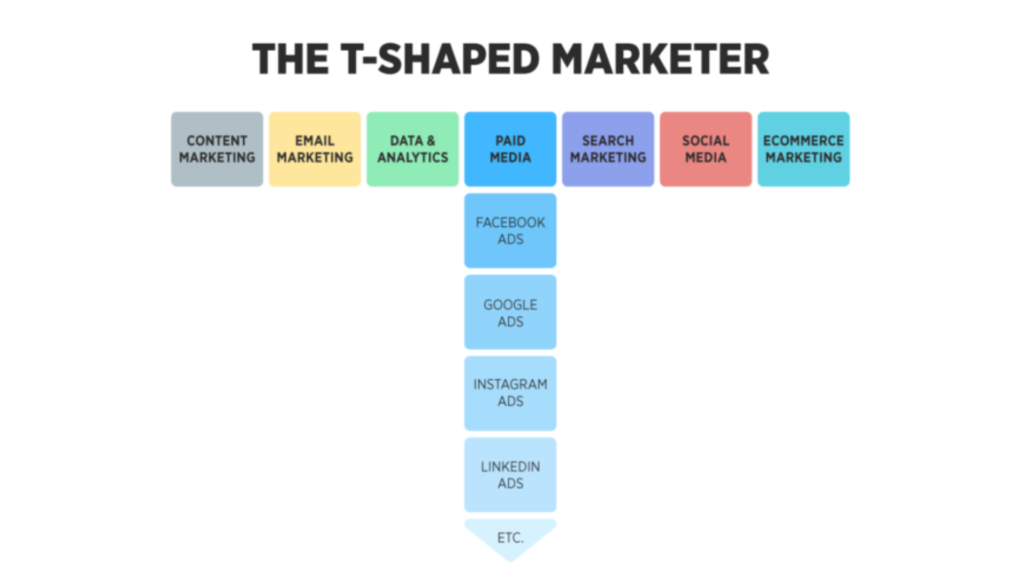
In a world where marketing evolves faster than platforms can update their algorithms, businesses no longer need “just” social media managers or SEO specialists. They need thinkers T-shaped digital marketers who understand the full spectrum of digital strategy yet master one skill deeply enough to drive measurable growth. The year 2026 marks a new era of marketing agility and the professionals leading it aren’t defined by tools, but by adaptability. What is a T-Shaped Marketer? A T-shaped digital marketer is someone who has broad knowledge across multiple marketing disciplines like SEO, paid ads, social media, email marketing, analytics, and content but deep expertise in one specific area. The vertical stroke of the “T” represents your core specialization (say, Performance Marketing or Content Strategy), while the horizontal stroke represents your understanding of how every other channel connects. It’s the difference between saying, “I run Google Ads,” versus, “I know how Google Ads, SEO, and social content together can lift overall brand performance.” A T-shaped marketer doesn’t just execute campaigns, they build ecosystems. The Death of One-Dimensional Specialization A few years ago, being a “Facebook Ads Expert” or “SEO Specialist” was enough to get hired. But in 2026, the landscape is brutally fast and integrated. Social algorithms shift every quarter. AI automation redefines what “technical expertise” even means. Brands demand marketers who can strategize across channels, not just within one. Startups, especially, can’t afford siloed roles. A marketer who understands email workflows, content funnels, and ad copy performance can save teams time, data, and resources while also scaling faster. That’s why the new rule is simple: Depth is valuable, but only when supported by breadth. . How to Build Your “T” You don’t wake up T-shaped, you build your “T” deliberately through projects, experimentation, and learning across channels. Here’s what that looks like in action: SEO + Paid Ads + Analytics: An SEO specialist learns how paid ads amplify organic reach and tracks keyword conversions through analytics. Content + Social Media + Email: A content creator understands how long-form blogs feed social storytelling and email drip sequences. Strategy + AI + Data: A strategist uses AI tools for keyword prediction, campaign optimization, and personalized audience targeting. The secret? Don’t chase every skill. Focus on learning how different channels support each other and how data flows across them. That’s what separates an executor from a strategist. How T-Shaped Marketers Help Businesses Win For startups, agencies, and brands, hiring T-shaped digital marketers means one thing: agility. Startups get professionals who can wear multiple hats and grow with the business. Agencies gain team members who understand how to integrate client campaigns across touchpoints. Brands benefit from marketers who can connect creative storytelling with performance outcomes. In short, they’re not just marketers, they’re growth architects. They see both the creative and analytical sides of marketing. They connect engagement to revenue. They translate metrics into business outcomes. And that’s the future of marketing leadership. UpskillNexus’s Model for Building Multi-Channel Professionals At UpskillNexus, the future marketer isn’t trained to be a “tool operator” but a strategic digital thinker. Every course, from foundation to specialization, blends core marketing fundamentals with exposure to emerging tools and channels including AI, automation, and data-driven storytelling. Students learn to: Think like strategists, not just executors. Integrate SEO, Paid Ads, Social Media, and Analytics. Use real-world tools to build portfolios that prove adaptability. By the end of their journey, they don’t just know marketing they understand how marketing works together. That’s the UpskillNexus difference: building T-shaped digital marketers ready to lead, not just follow trends. The Future Belongs to the T-Shaped The digital marketing ecosystem will only grow more complex new platforms, more AI tools, and data everywhere. But one skill will never go out of style: the ability to connect dots across disciplines and think strategically. That’s what being T-shaped truly means mastering one skill, understanding many, and adapting faster than change itself. If 2025 was the year of AI adoption, then 2026 is the year of adaptable marketers. And the most adaptable ones will be those shaped like a “T.”
Digital Marketing Course After 12th: A Smarter Career Move Than Waiting for a Degree

Most students are told the same thing after 12th pick a degree, wait three years, and only then think about their career. But what if you didn’t have to wait? What if you could start working, earning, and exploring real-world opportunities while everyone else was still figuring things out? That’s why so many students today are choosing a Digital Marketing Course after 12th. It’s not just a backup plan, it’s a fast-track to building a career without depending on traditional pathways. What Is Digital Marketing in Simple Words? Digital Marketing means helping brands grow online. It could be through Instagram reels, YouTube ads, Google ranking, email newsletters or content creation. If you’ve ever seen an ad before a YouTube video or a trending post on Instagram someone like you was behind it. The best part? You don’t need coding, a degree, or technical background. Just interest, consistency and the right training. Why Are Students Choosing Digital Marketing Courses After 12th in Delhi? Delhi has become a hotspot for job-oriented digital marketing courses, especially in places like Rajouri Garden, where institutes now offer AI-based digital marketing training with live projects. Instead of waiting years for a college placement, many students start earning within months through: Freelancing Social media management Content creation Junior digital marketing roles in startups and agencies How Much Can You Earn After Digital Marketing Courses Post 12th? Your income depends on how you choose to apply your skills. Some students start freelancing and make anywhere between ₹15,000 to ₹60,000 per month by managing Instagram pages, running ads, or writing content for small businesses. Those who choose job roles in companies usually begin with salaries around ₹4–6 lakhs per year, which increases quickly with experience. In fact, with consistent growth over 3–5 years, digital marketers often scale to ₹15–25 lakhs per year, especially in performance or AI-driven roles. How Long Does a Digital Marketing Course After 12th Take? Most professional courses range between 3 to 6 months. Some offer weekend batches for college-going students, while others allow hybrid learning offline or online based on convenience. Unlike traditional education, the goal isn’t just to complete the syllabus, it’s to become employable. What Will You Learn in a Good Digital Marketing Course? A solid curriculum should teach: How to research markets and understand consumer psychology How to rank websites on Google through SEO How to set up and optimize ads on Google and Meta (Facebook/Instagram) How to grow social media pages and plan content How to build email funnels and automate follow-ups How to track results using Google Analytics and Pixels How to use AI tools like ChatGPT, Canva AI or automation platforms How to deal with clients, price your services and build your brand This is not just about learning it’s about learning how to apply what you learn. What Career Paths Can You Take After the Course? There’s no single path. You get to create your own. Some learners choose freelancing, taking projects on platforms like Fiverr, Upwork or even via Instagram DMs. Some take jobs in digital marketing agencies, startups or media firms, handling ads, content or SEO. Some launch their own businesses or niche pages, turning passion into income. Some become content creators or influencer strategists, using marketing to grow audiences. Whether you prefer stability, freedom or flexibility, digital marketing gives all three. So, What’s the Best Digital Marketing Course After 12th in Rajouri Garden? The best course is not the one with fancy certificates. It’s the one that: Makes you practice on real campaigns, not just watch lectures Teaches you AI tools and automation, not outdated methods Trains you to handle clients and build your professional presence Helps you walk out with a portfolio, not just notes If a course can do that, you’re not just learning digital marketing you’re becoming a digital marketer. Your journey after 12th doesn’t have to be slow, confusing or dependent on waiting for a degree. With the right skill, you can earn, learn and grow simultaneously. So instead of asking “Which field should I choose?”, maybe ask: “Which field gives me control over my future?” Digital Marketing just happens to be one of them.
DM Tool of the Week: Fabricodes – Redefining Visual Design for Creators
In the digital-first world we live in, visuals are the heartbeat of online communication. Whether you’re a content creator crafting your next YouTube thumbnail, a small business owner designing promotional posts, or a student presenting your ideas the way your visuals look can make or break audience engagement. Yet, creating those perfect visuals isn’t always easy. It often means juggling multiple tools, endless design tweaks, and countless re-edits. That’s where Fabricodes enters the picture, a next-generation creative tool developed by our faculty members that blends AI precision with human creativity. What is Fabricodes? Fabricodes is an intuitive visual editing and customization tool that empowers users to modify images, experiment with color palettes, and create visually consistent content all without needing advanced design skills. At its core, Fabricodes simplifies one of the most time-consuming parts of content creation: making visuals look professional and on-brand. From recoloring outfits to adjusting backgrounds and tones, it helps you transform a simple photo into a compelling piece of digital content within minutes. It’s not about automating creativity, it’s about enhancing it. Why Fabricodes Matters Today The internet is flooded with visuals. Every second, over 1,000 new YouTube videos and millions of social media posts go live. Standing out visually isn’t optional anymore, it’s essential. But here’s the catch: not everyone has access to a professional designer or the time to learn complex tools. That’s where Fabricodes fills the gap. It enables individuals and teams to maintain design consistency, speed, and creativity all at once. For instance, a creator can use Fabricodes to recolor a thumbnail outfit to match their brand hue, while a marketing intern can adjust lighting or contrast to make an Instagram post more engaging all within a few clicks. What Makes Fabricodes Different AI-Powered Image Customization Fabricodes’ intelligent AI can identify colors, fabrics, and patterns letting you change outfit shades, adjust lighting, or tweak a background instantly. Want your red T-shirt to look royal blue? Done. Need to brighten a dim photo for your LinkedIn post? Easy. The edits look natural, not artificial, maintaining texture and tone without losing authenticity. Designed for Thumbnails and Social Media Creators spend hours designing thumbnails that can make or break click-through rates. Fabricodes simplifies this. You can upload your thumbnail photo, test multiple styles, and preview real-time results giving you quick, polished visuals ready for YouTube, Instagram, or any platform. Consistency Without Compromise Brand consistency builds trust. Fabricodes helps you lock in your brand palette, typography, and tone, so every visual aligns with your identity no matter how fast you’re producing content. Easy for Everyone No graphic design degree required. The interface is built for simplicity: upload, tweak, preview, and export. That’s it. Constantly Upgrading with Smart AI Features The Fabricodes team keeps updating the tool with next-gen features like: – Background refinement and auto-cleanup – Color correction and tone balance – Smart element recognition for detailed area editing – Texture-aware outfit recoloring Each update makes it more intuitive, more capable, and more creator-friendly. Real-World Use Case Let’s say you’re a digital educator creating a thumbnail for your next masterclass. The photo you took is perfect except your outfit clashes with your course branding. In traditional tools, you’d spend 30 minutes adjusting hues manually. With Fabricodes, you just select the color area, pick your preferred brand tone, and voilà the change is seamless. You can also enhance lighting, clean the background, and adjust contrast to make the visual crisp and engaging. Result? A professional thumbnail ready in under five minutes, not fifty. Benefits at a Glance – Saves time: Edit, enhance, and finalize in minutes. – Boosts creativity: Focus on your concept, not on fixing technical errors. – Ensures brand consistency: Keep colors, tones, and aesthetics uniform. – Improves quality: AI-led refinements ensure polished, realistic visuals. – Simplifies collaboration: Ideal for teams working across campaigns or creators managing multiple content streams. How to Use Fabricodes Upload your image: Start with a base photo or existing design. Select your edit mode: Outfit recoloring, tone adjustment, or background cleanup. Experiment with styles: Preview multiple variations instantly. Download and publish: Export your final design in your preferred format. It’s that simple and that powerful. The Creative Edge In today’s creator economy, tools like Fabricodes are more than just design helpers; they’re productivity boosters. They allow you to do more in less time, without compromising creativity or quality. Fabricodes helps you tell your story visually in a way that feels professional, personal, and perfectly you. The future of design isn’t about replacing human creativity with AI, it’s about using AI to enhance human expression. Fabricodes embodies this future: simple, intelligent, and creator-focused. It brings the sophistication of advanced editing into an interface anyone can master. If Canva makes design accessible, Fabricodes makes it personal and intelligent. Try Fabricodes today and see how easy it is to transform your visuals into stories that stand out. Explore more such digital innovations and creator tools at UpskillNexus, where learning meets real-world application.
The Cybersecurity Implications of Cloud-Native Applications
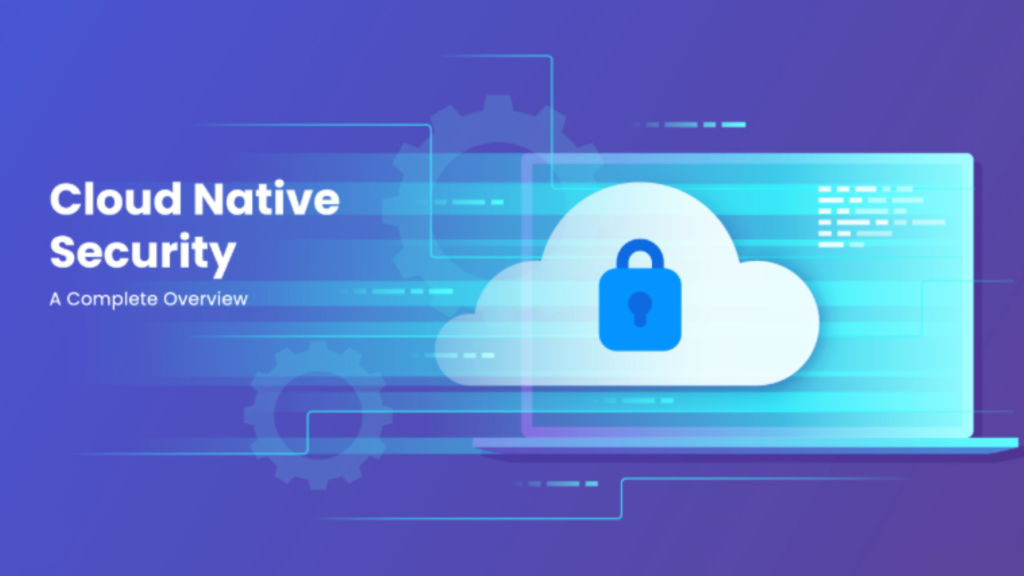
Cloud-native applications have completely changed how modern businesses build and deploy software. Instead of one big monolithic system, apps are now broken into microservices, connected through APIs, and deployed using containers managed by platforms like Kubernetes. This architecture gives speed, flexibility, and scalability, which is ideal for DevOps teams. But there’s a tradeoff — more complexity means more security risks. Let’s break it down. Why Cloud-Native Apps Introduce New Cybersecurity Risks In traditional systems, everything lived inside one controlled environment. In cloud-native systems: Every microservice is its own mini-application, which means every component is a potential entry point. APIs become the main communication layer, making them the new attack surface. Containers and orchestration tools (like Kubernetes) bring operational efficiency — but if misconfigured, attackers can hijack entire clusters. DevOps speed often overrides security checks, leading to risky deployments slipping into production. cloud-native = more moving parts = more doors to break in. Key Vulnerabilities to Watch Out For 1. Insecure APIs APIs are often left exposed without proper authentication. Hackers love these because a single vulnerable endpoint can reveal sensitive data. 2. Misconfigured Containers Many teams use pre-built container images from public repositories without checking them. One bad image = instant malware injection. 3. Excessive Permissions If containers or Kubernetes pods are given admin-level access, attackers can escalate privileges and take control of entire systems. 4. Unmonitored East-West Traffic Inside a microservices setup, services talk to each other constantly. Without network segmentation or monitoring, attackers can move laterally without being detected. Who Is at Risk? Startups and fast-scaling SaaS companies that prioritize shipping features over security reviews. Enterprises migrating legacy apps to cloud-native environments without modern security frameworks. DevOps teams that don’t have dedicated security engineers or automated policy enforcement. if your system is cloud-native but your security is not, you’re at risk. Best Practices for Securing Cloud-Native Applications Security in cloud-native environments isn’t about building walls. It’s about embedding protection across every layer: Secure APIs with authentication, rate limits, and continuous validationScan container images for vulnerabilities before deploymentUse Role-Based Access Control (RBAC) to minimize privilegesSegment microservices using service meshes like Istio or LinkerdEnable runtime monitoring to detect unusual container or network behaviorAdopt DevSecOps — shift security left and integrate it into CI/CD pipelines Speed Without Security Is a Trap Cloud-native applications unlock innovation but only if security evolves with architecture. The real mindset shift is this: Don’t secure the cloud like a traditional server.Secure it like a distributed system with shared responsibility. Teams that integrate DevSecOps practices, API security, container hygiene, and continuous monitoring will stay ahead of threats without slowing down development.
The Reasons Big Companies Are Laying Off Staff in Tech in 2025

What’s Going On With Mass Layoffs in Tech? The technology sector has significantly changed from the ever-optimistic, high-paying, and rapidly evolving sector that it once was. With mass layoffs taking place in tech the world over, 2025 is the year that the world recession and restructuring of the tech industry are evident. Big tech firms like Google, Amazon, Meta, and Microsoft, and IT industries in India, have started mass layoffs, and the message that the industry is facing a restructuring is undeniable. The once secured employed positions are now at risk with the proliferation of AI and automation tools that fundamentally change how work is performed. What Are the Numbers Telling Us? By the end of 2025, over 184,000 tech positions were reported to be eliminated from the global workforce. AI automation and restructuring contributed to almost 50,000 of those layoffs, and. clearly demonstrating that advancement in automation and AI technology is not employed to enhance productivity but to eliminate jobs in tech. The global tech sector is witnessing a slowdown, as seen in the layoffs from Tata Consultancy Services in India, and with over 12,000 cuts to their workforce. This indicates that the layoffs in the tech sector are not just a result of Western business practices. Why Are These Layoffs Occurring? Role Changes Due to AI and Automation AI and automation are taking over a lot of traditional tech roles—including coding, quality testing, support, and data processing. Hence, positions getting cut at tech workplaces are a reflection of that shift in digital tech. TCS’s layoffs in 2025, for instance, were in part due to AI-driven automation and a need for mandatory employee skill upgrades. More automation means fewer people are needed to perform more sophisticated tasks and at a much faster rate. Cost-Cutting Due to Growth Slowdowns and Profit Pressure The tech sector saw a radically favorable demand shift during the pandemic, but that has now settled. Layoffs are now a common practice to control costs and become more streamlined, even at the profitable Microsoft and Meta. After the 2025 economic downturn, cost cutting has become the most dominant focus for nearly all organizations, even if they have historically prioritized aggressive growth. Adjusting Strategic Business Focus Restructuring large and legacy staffing models to support new AI, cloud, and data intelligence lines of business is reshaping the tech industry. As a result, certain job functions are becoming misaligned with business plans for the future. Businesses are shifting gears by reorganizing, reallocating, and prioritizing automation-centered workflow strategies. Implications for Tech Workers For anyone working, or thinking of working, in tech, here are implications of the big tech layoffs in 2025: Tech layoffs highlight a growing reality, the assumption of job security in the tech industry is misplaced. Automated processes are taking over routine functions. The job market’s demand for new tech workers is higher than ever, particularly those proficient in emerging AI, data science, cybersecurity, and cloud technologies. With the shift correcting the demand for tech jobs, the professionals in the industry will need to reskill and upskill if they want to remain “marketable.” With a wave of tech layoffs, the demand for jobs hosted in tech will be produced by thousands of veteran tech employees rejoining the workforce To summarize, given the rise of AI and the automation of processes, the only thing for a tech worker to vanish is to reskill and adapt. Advice for Tech Professionals To remain relevant given the tech layoffs and to maintain a competitive edge once the economy recovers, tech professionals should: Take the initiative to study new and emerging areas. In particular, AI, cloud computing, cybersecurity, and automation technologies. Acquire functional skills in areas like problem-solving, cross-functional team collaboration and coming up with business strategies. Seek out hybrid occupations where tech skills are merged with a different domain like managing clients, creativity, and strategic planning, and implement them in tech. Anticipate layoffs as an outcome of industry restructuring. Utilize their expertise. Tech professionals should look to new entry points in tech as a way to transition. The most advanced professionals are implementing strategic repositions to align with the expected tech job market. A Balanced View: It’s Not All Negative The firings in the tech field are worrying, but this time still has its possibilities. The fields of AI, machine learning, data analytics, and cybersecurity are thriving, and many startups and mid-sized tech firms are raising the pace of their hiring and providing more flexible positions and faster paths for advancement. The most notable tech companies are shedding jobs, and although it may be worrying, it does indicate an evolution in the industry rather than the end of something. The industry is changing from a manpower intensive model to an innovation model built around the use of AI and automation tools. Those who will value and pursue the tools of the industry will be the ones to shape the future. Final Thoughts The tech industry 2025 layoffs are more than headlines-they signify a change in the value of creativity, skills, and adaptability in a tech world with AI automation. If you are a tech professional, the most important thing is not to panic but to prepare. Assess your skills, be observant, and find where you fit with things being digitized. The future of tech jobs will be for those who embraced change, not for those who stalled.
November Fortnight Update 2025: India’s Tech Pulse & Skills Shift You Must Know

As we move deeper into Q4 of 2025, India’s tech ecosystem is witnessing one of its most transformative phases.Government policies, consumer tech launches, AI regulations, deep-tech investments, and the rise of cybersecurity are collectively shaping what many experts are calling: This fortnight brought game-changing announcements across AI, deep tech, cybersecurity, digital marketing, and consumer gadgets all pointing to one truth: Here’s your full UpskillNexus November Fortnight Update with expanded insights, sector-wise analysis, and actionable career implications. Karnataka Unveils ₹518 Crore Deep-Tech Push (2025–2030) A new blueprint for India’s next 25,000 startups Karnataka’s newly approved ₹518 crore Startup Policy marks one of the most decisive moves toward building a sustainable, inclusive innovation landscape. While Bengaluru remains the country’s Silicon Valley, this policy expands the radius of innovation. What the Policy Includes Support for 25,000+ startups, including: 10,000 from Tier-2 cities (Hubballi, Belagavi, Mangaluru, Mysuru) Dedicated funds for: AI-led manufacturing Robotics automation labs Blockchain governance platforms Quantum computing research node Special grants for: Women-founded startups Student-run ventures Rural digital entrepreneurs Why This Matters (Big Picture) Bengaluru’s startup saturation had become a concern rising costs, talent wars, and infrastructural strain.The new policy ensures innovation doesn’t stay confined; it spreads across the state. Career Implications This policy opens thousands of roles in: AI development, MLOps & data science Robotics process automation (RPA) engineering IoT hardware + firmware development Product & startup operations Innovation program management Deep tech roles are expected to grow 40% YoY in 2026, according to industry forecasts. For students:This is the entry ramp into core tech fields that were previously limited to major cities. India Launches Historic ₹1 Lakh Crore RDI Fund The country’s biggest-ever investment in AI, semiconductors & frontier tech India’s new Research, Development & Innovation (RDI) Fund signals a national pivot from using global tech to building global tech. What the Fund Covers Advanced AI research (GenAI, AGI frameworks, multimodal systems) Deep-tech innovation (quantum processors, neuromorphic chips) Semiconductor fabrication & chip design Defence-grade cyber technologies Public sector AI models for healthcare, transport, and agriculture Expected Outcomes New AI research clusters in Bengaluru, Pune, Hyderabad, Chennai More collaboration with institutions like:IISc, IITs, Private R&D labs, Global AI centres (US, EU, Japan) Rise of India-made LLMs, AI copilots, autonomous robotics systems Career Impact Roles that will explode in demand: AI researchers & machine learning engineers Cybersecurity specialists (AI threat detection, SOC automation) Data governance & AI ethics professionals Semiconductor engineers (chip design & fabrication) AI-related hiring is expected to increase by 65% in 2026, making it India’s fastest-growing job sector. For professionals:This is the moment to deepen your AI skills before the demand curve peaks. OnePlus OxygenOS 16: AI Becomes a Daily Utility The biggest consumer AI update on Indian smartphones OnePlus has officially rolled out OxygenOS 16 for OnePlus 13 and 13s users, and the update is significant because it brings true AI assistance into everyday smartphone interactions. Key AI Features Explained AI Writer Automatically writes captions, emails, summaries, and content drafts based on prompts. Example: Type: “Write a professional 2-line email to my manager about the report.” → Auto-writing happens. VoiceScribe Real-time speech-to-text writing with meeting summarization. Useful for: Students Working professionals Journalists Content creators Smart Scheduling AI learns user habits and optimizes reminders, tasks, and routines. Why This Matters Smartphones are now becoming true digital assistants, not just communication devices. Career Implications Jobs that will evolve: Content & digital marketing roles shifting to AI-assisted workflows UX/UI roles now require understanding AI behaviour Product managers must design AI-first experiences For marketers: AI will replace repetitive writing tasks only those with strategic, analytical, and creative skills will stand out. Meta’s Ray-Ban Smart Glasses Come to India (Nov 21) India enters the wearable AI era Meta’s AI-powered Ray-Ban Smart Glasses are launching in India, making it one of the first Asian markets to receive them. What Makes Them Special Voice assistant (“Hey Meta”) Real-time visual search (point → identify → explain) First-person content recording Live translation overlays AR interface design Industry Impact The arrival of smart glasses marks the beginning of: Ambient computing Hands-free information access AI-driven real-world navigation AR-enhanced retail and education Career Opportunities This launch accelerates demand in: AR/VR development Generative UI (interfaces that change using AI) Wearable IoT hardware engineering HCI (Human-Computer Interaction) design These are currently premium, high-paying roles in India. Cybersecurity: India Upgrades Its Digital Armor A silent but powerful shift is happening beneath the surface While AI and consumer tech stole the headlines, cybersecurity saw major developments this fortnight. What Happened BFSI sector is mandated to adopt advanced SOCs with 24/7 AI surveillance CERT-In announced tighter compliance guidelines for enterprises Public sector departments began shifting to zero-trust architecture Increase in cyber threat activity from phishing to AI-generated fraud Industry Trends Companies are hiring AI cybersecurity analysts SOC teams are expanding Demand for cloud security & DevSecOps is rising sharply Cybersecurity hiring has increased 42% compared to last year. Career Implications High-demand cybersecurity roles include: Threat intelligence analyst Cloud security architect Cyber forensics investigator SOC engineer Red team/blue team specialist If you want long-term job security, cybersecurity is one of the safest career paths today. Digital Marketing: AI Automation Becomes the New Standard The marketing industry is undergoing its biggest shift in 10 years This fortnight brought major updates from Google, Meta, and leading Indian brands, showing the rapid mainstreaming of AI-led marketing. Key Developments Google deepens AI integration in Search & Ads Search results now blend: AI-generated summaries Product recommendations Personalized search journeys Voice and visual search Indian brands adopting AI-first content teams E-commerce, edtech, fintech, and D2C brands are now: Using AI for creative generation Automating ad campaign optimization Predicting user behaviour using ML Running hyper-personalized marketing funnels Voice search demand is exploding Driven by smartphones, smart glasses, and regional language penetration. Career Implications Digital marketers now need: AI tool mastery (Gemini, OpenAI, Claude, Jasper, HubSpot AI) SEO optimized for AI-driven search engines Skills in marketing analytics & automation Strong storytelling + strategic thinking Execution-based marketing jobs will shrink;