
AI Integration in Digital Assistants: Transforming Customer Interactions
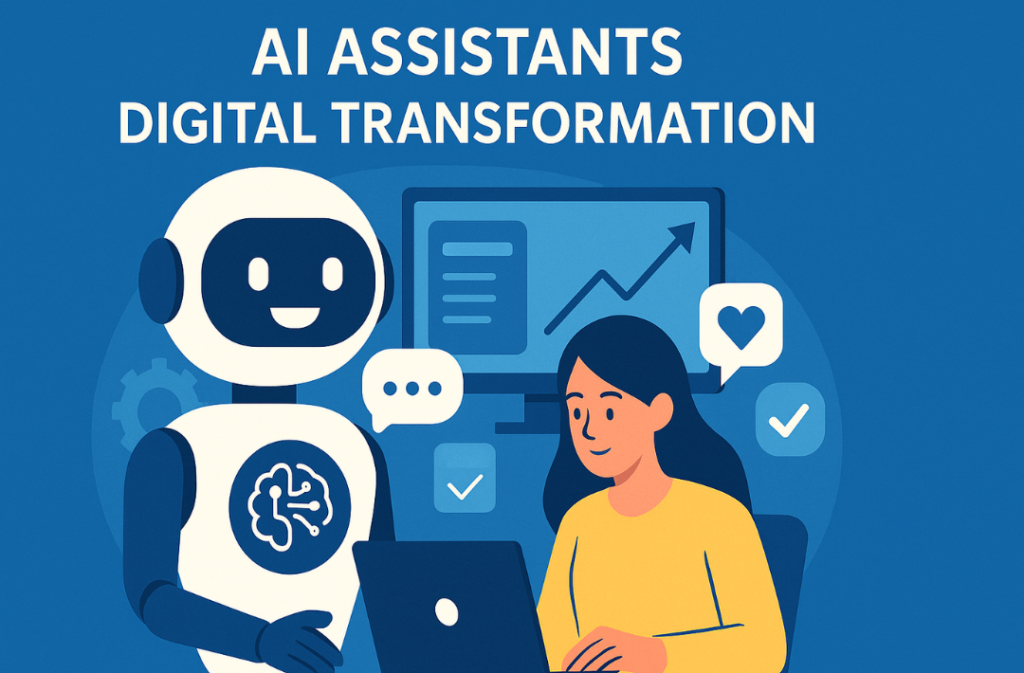
AI Integration in Digital Assistants: How It’s Changing Customer Interactions Forever Let’s be honest — customer service hasn’t always been a breeze. Long wait times, endless call transfers, robotic responses… we’ve all been there. But recently, something’s changed. You hop onto a website, and a friendly assistant appears: “Hi Sarah! Looking for your last order?” And just like that, you’re getting help. Fast. Accurate. Personalized. That assistant? It’s not a human. It’s AI. And it’s redefining the way companies interact with customers. From Chatbots to Wise Conversations Do you recall when chatbots sounded like this? “I’m sorry, I didn’t catch that. Rephrase, please.” Uh Uh… not all that useful. Today’s artificial intelligence-based virtual assistants are something else. They get natural language, context, emotion, and even intent. So they can truly converse — respond, not just. They run on such as: Natural Language Processing (NLP): Getting What You Really Mean. You know those times when you say something and people just get you — even if you’re not being particularly articulate? Instead of using exact keywords, NLP enables AI to understand what you mean by the words. If you type, “Where’s my order?” or “Hey, did my package ship yet?”, the assistant gets the point. It even picks up on your tone. Feeling irritated? It answers more empathetically. Just asking out of curiosity? It stays light and relaxed. In short, NLP allows AI to communicate in your language — typos, emojis, and all. Machine Learning: Learning from Experience This is where it gets exciting — the more you use the assistant, the more intelligent it gets. With machine learning, AI learns from each interaction. It identifies what succeeded, what failed, and how to do better the next time. It’s like providing your aide with ongoing, in-the-field training. In time, it acquires: The most common questions users submit How to respond best to them How to resolve issues in less time It continues to improve — and it never forgets a lesson. Contextual Memory: Remembering the Details Ever had to retell your problem to three support reps in a row? Ugh. AI assistants don’t do that. They remember previous conversations, your habits, and even minor details — like whether you prefer text or email alerts. So when you come back later, it may greet you with: “Welcome back! Last time you inquired about a return — would you like to follow up on that now?” That sort of environment makes the whole experience seem so seamless, personal, and in all honesty… kinda awesome. They act human, they think human, and they reply live. Personal, Like a Human (But Better) This is where it really gets thrilling: personalization. AI helpers aren’t simply responding to your queries — they’re customizing each encounter to you. They understand your shopping history, your tastes, even your grievances. So rather than having to begin from scratch, you receive: Product recommendations you actually desire Support that is aware of your past Help that is one step ahead Real-life moment: You’re attempting to reorder your favorite skin product. Before you can even type the name, the helper responds: “Hey! Want to reorder your Vitamin C Serum? It’s back in stock.” That’s the magic of AI working behind the scenes. Faster Service, Happier Customers AI assistants are more or less the customer care agents that never sleep. They work 24/7, attend several conversations simultaneously, and they don’t feel exhausted. They can: Book appointments Answer FAQs Track orders Process returns Even upsell or cross-sell — all in the context of conversation This isn’t better for business only — customers adore it as well. Individuals prefer fast resolutions, not lengthy hold music. And what are the outcomes? Greater customer satisfaction. Faster resolution times. More sales. But What About Human Support? Here’s the thing: AI isn’t taking human jobs away — it’s enabling them. Whereas AI deals with the mundane, human agents are available to work on: Complex issues Emotional situations Establishing authentic connections It’s a perfect partnership. Think of AI as the assistant, and humans as the heroes stepping in when needed. Looking Ahead: The Future of AI Assistants We’re only scratching the surface. The next generation of AI digital assistants will: Predict problems before they happen Offer support across voice, video, and even AR Learn not just from you, but from every interaction across the system Imagine an assistant that can say, “Hey Alex, looks like your internet speed has dropped. Want me to troubleshoot that for you?” That’s not sci-fi. That’s coming — fast. Final Thoughts: Ready or Not, AI Is Here to Stay AI-powered digital assistants aren’t a luxury anymore — they’re a customer service essential. They’re smarter, faster, more personal, and they’re setting a new bar for customer experience. So whether you’re a business owner curious about how to enhance customer interaction, or a consumer who appreciates the convenience of AI… one thing’s certain: How we engage with brands is evolving — and it’s never been smoother.
Harnessing Large Language Models for Personalized Customer Engagement

What if your next marketing recruit was an AI that could simultaneously write, analyse, and converse with customers? Ready for a Thought Experiment? Consider this: A customer visits your site. They have a question, but your support team is unavailable. Rather than a static chatbot, they’re met with a natural, conversational assistant who truly understands what they’re asking and responds like a human. They walk away with the solution, a product suggestion based on their web browsing, and a good opinion of your company. Sound sci-fi? It’s already taking place with Large Language Models (LLMs). Why LLMs Are Revolutionizing the Game Large Language Models, such as GPT-4, are AI algorithms trained on hundreds of billions of words. That is, they don’t only create content—they comprehend language, context, sentiment, and intent. So what can they do for your business? Let’s dismantle it. 1. Turning Talk into Relationships Break up “automating” support. Start making conversations worth having. Face it—older chatbots don’t cut it. They clog up. They recycle responses. They irritate more than assist. LLMs turn the page. They fuel conversational AI that feels conversational. Use them like virtual representatives who can: Spot customer tone and sense of urgency. Remember prior conversations Deliver personalized solutions in real time Reflect your brand voice (yep, even the sass) Example: Klarna’s AI assistant now answers two-thirds of customer chats, providing responses that are quick, on-brand, and context-specific. Want to witness this type of tech in the flesh? Take a look at Intercom’s Fin AI. It’s like conversing with your most intelligent, most understanding team member. Ask Yourself: Would your customer support be able to double its effectiveness without having to double its size? 2. Hyper-Personalized Content, on Autopilot One message. A thousand iterations. All tailored. Suppose two customers drop by your site. One is earth-friendly, shopping for green products The other is price-conscious, price-comparison With LLMs, you don’t have to pick one message. You can address both —dynamically. LLMs are able to craft product copy, headlines, CTAs and emails tailored to personal taste. No more creating 15 copies of the same campaign. Simply input the AI with your segments, and have it write in your tone. Brands adore: Copy.ai and Jasper for quick marketing copy HubSpot’s AI tools for CRM-driven personalization Dynamic landing pages based on user data (powered by AI-generated copy) Pro Tip: Combine customer behavior + AI writing to create journeys that feel hand-crafted, without the manual work. 3. Your Data’s Story Told in Seconds What are your customers really telling you? Let AI read between the lines. You’ve got mountains of data. Reviews. Support tickets. Survey responses. Social chatter. LLMs can: Summarize thousands of messages Detect trending complaints Surface feature requests Even draft response plans Case in Point: A SaaS company used GPT-4 to analyze 12,000 chat logs. In a matter of minutes, they discovered that confusing pricing was leading to drop-offs. The solution? A streamlined pricing page—and an increase in conversions. Want to give it a shot? Tools like LangChain and Pinecone enable you to create clever, searchable databases that use plain language. Question to Consider: Are you wasting more time gathering feedback or taking action? 4. Speak the Customer’s Language—Literally Consistency and clarity, on every channel and culture. Whether you’re posting to Instagram, composing a sales email, or constructing a product page for a worldwide audience, LLMs can guarantee: Smooth tone conversion (TikTok informal? Email formal? No issue.) Translation with cultural sensitivity Brand voice that remains consistent on all channels Airbnb’s AI-based listings are perfect proof. They translate and shorten host descriptions without losing tone, clarity, or warmth, —minus the Google Translate feel. Picture this: A single click, and your product description is translated into six markets, four tones, and three platforms—all in-brand. Ask Yourself: How many potential buyers drop off because the message fails to resonate? Let’s Talk ROI Applying LLMs isn’t a tech bolt-on—it’s a revenue catalyst. As McKinsey finds, firms utilizing AI-driven personalization are realizing: 5–15% increase in revenue 10–30% reduction in customer acquisition cost Enhanced customer satisfaction and loyalty If executed well, LLMs don’t only scale your content. They scale your impact. The takeaway? You’re no longer deciding between speed or quality, automation or humanity. With LLMs, you get both. So ask yourself—how much more powerful could your customer experience be if it actually felt personal, every time? The future of interaction is here. And it’s not robotic. It’s remarkably human.
What is Performance Marketing

We use “digital marketing” as a similar term, as there are many types of digital marketing and channels. Performance marketing is one digital marketing tactic that is frequently disregarded. Advertisers only pay for performance marketing when certain actions are taken. For example, when a viewer clicks on their page or else when they make a purchase. The budget is limited and efficiency is non-negotiable. Performance marketing ensures you get what you pay for: no paying for invisible billboard space, only for clicks, sign-ups, or sales that move the needle. What is Performance marketing ? Performance marketing is a results-based strategy for digital marketing in which companies only pay marketing service providers when certain goals are met, like leads, sales, or clicks. This makes it a very effective marketing strategy because advertisers only pay when their business goals are achieved. How does it work ? Breakdown of how performance marketing work : Establish Specific Goals: Establish clear, quantifiable objectives first, like clicks, leads, downloads, or sales. Your campaign’s metrics, budget, and structure will all support these objectives. Choosing the right channels: Pick the platforms where your objectives can be best met: Search engines (e.g., Google Ads, Bing Ads) for high-intent traffic. Social media (Facebook, Instagram, YouTube) for awareness and action. Affiliate networks and influencers for pay-per-action models Display/native ads, email, retargeting, and programmatic platforms (DSPs). Create Engaging Campaign Content: Create engaging content—text, photos, and video—that is tailored to the platform and your target audience. Use compelling CTAs to nudge users in the direction of your intended action. Set Pricing Models: Decide how you’ll pay for performance: CPC (cost per click) CPM (cost per mille/impressions) CPL (cost per lead) CPA/CPS (cost per acquisition/sale) Put Analytics & Tracking into Practice: Install tracking tools, such as affiliate tracking, platform pixels, and Google Analytics. Track important metrics in real time, including CTR, conversion rate, CPA, CPL, ROAS, and LTV. Continue to Optimize: Performance marketing thrives on data-driven iteration: Examine which advertisements, creatives, target audiences, or placements yield the best results. A/B testing can be used to determine the best combinations. Dynamically modify budgets, creatives, targeting, and bidding. Scale Effective Strategies: Budgets should be increased and successful campaigns should be expanded once profitable. Put low-performing ads on hold or change them if results start to decline. Spending is always allocated to high-ROI initiatives thanks to this agile scaling. key metrics Here are the key metrics to monitor in performance marketing, along with what each one measures and why it matters: Top Performance Marketing Metrics (CPM) Cost per Thousand: CPM = (Total spend ÷ impressions) × 1,000. Effective reach is indicated by a low CPM, making it perfect for stages of brand awareness. Click-Through Rate (CTR): Clicks: actual engagements from viewers to your landing pages. CTR = (Clicks ÷ Impressions) × 100%. A high CTR indicates that your messaging and creative align with the audience’s intent. 3. Conversion Rate (CVR): Conversion occurs when a desired action (such as a purchase or sign-up) is completed. CVR = (Conversions ÷ Clicks) × 100%. Cost per Action(CPA): CPA = total spend ÷ number of actions (lead or sale). Customer Acquisition Cost (CAC): CAC = all marketing & sales spend ÷ new customers acquired. A more comprehensive perspective than CPA/CPL, aiding in assessing the acquisition’s long-term viability. Return on Ad Spend (ROAS) / ROI: ROAS = Revenue from ads ÷ ad spend Importance of Performance marketing In the current digital environment, performance marketing is essential for the following reasons: A focus on ROI and outcome-based spending Spending is measurable and effective since you only pay for particular actions, such as clicks, leads, or sales. It transforms budgets from vague to clear, thereby getting rid of unnecessary spending. Flexibility in Real Time You can instantly modify bids, creatives, and targeting with the help of performance campaigns, which provide real-time data. You can pause what isn’t working and take advantage of what is, thanks to this agility. Accurate Targeting Reaching ideal clients based on their demographics, behavior, and intent is made possible by advanced tools. As a result, there will be fewer pointless exposures and better outcomes. Low-Risk & Scalable Start small, see what works, and then confidently scale campaigns that are successful. Quick risk management is possible by pausing underperforming creatives right away. Accountability and Transparency All metrics are monitored, including conversion rates, ROAS, CPC, and CPA. Strategic investment decisions and trust are fostered by stakeholders seeing exactly what they’re paying for. Engagement & Loyalty with Customers Data-driven personalization—displaying the appropriate message to users at the appropriate time—is the foundation of performance initiatives. This increases trust, relevance, and eventually loyalty. Innovation Driven by Data Each click produces insights. You discover what works, what doesn’t, and what resonates. These insights help you improve your channel mix, messaging, and targeting over time for long-term success. Integration of Multiple Channels Performance strategies offer a diversified reach and lessen dependence on any one channel by integrating search, social media, affiliates, influencers, display, and more. Enhances Brand Strategy Performance marketing enhances brand campaigns rather than operating independently. Research indicates that a well-balanced combination of performance and brand can double ROI. Conclusion Digital advertising’s future lies in performance marketing, which is revolutionizing how companies spend their money on advertising. Companies only pay when a specific action is completed, like a click, lead, or sale, as opposed to paying for just exposure, guaranteeing that every rupee generates quantifiable value.
What is Digital Marketing? Everything You Need to Know

The internet has a significant impact on how we live, communicate, and develop in the fast-paced digital age we live in today. With more than 5.5 billion users worldwide—nearly 70% of the world’s population—the internet has evolved beyond a simple browsing tool. Numerous opportunities are made possible by the internet, ranging from socializing on sites like Instagram and LinkedIn to starting a personal brand or operating a full-fledged business. It enables people to connect with people around the world, obtain information quickly, and transform their ideas into successful business endeavors. The emergence of digital marketing is among the most significant outcomes of this digital revolution. What is digital marketing? Digital marketing is the practice of promoting brands, products, and services through organic and non-organic methods to target our audience. Unlike traditional methods like print, radio, and TV, digital marketing relies on the internet to reach customers online and meet the demands of customers digitally. Digital marketing is a broad practice simply because there are many online platforms available. Posting on social media is a form of digital marketing, as are email marketing and blogging, etc. Key Components of Digital Marketing Search Engine Optimization (SEO): It is the practice of improving a website’s visibility in search engine results. It involves on-page optimization, off-page optimization, and technical aspects. Content Marketing: Content writing is the creation of written material for online platforms; it includes blog posts, articles, and scripts. It focuses on researching topics, planning content strategy, writing, editing, and optimizing text for the purposes. Social Media Marketing (SMM): The practice of using social media as a platform to promote brand’s, products, or services. It involves creating and sharing content on social media networks like Facebook, Instagram, Twitter, and LinkedIn to engage with the audience, increase brand awareness, drive traffic to the website, and increase sales. Email Marketing: The use of email to establish a connection with potential clients, increase brand recognition, foster client loyalty, and advance marketing initiatives. It entails sending emails to potential clients and consumers for a number of objectives, such as increasing conversions, advertising goods, and sparking interest in your company. Affiliate Marketing: A third-party affiliate markets a company’s products or services in order to help reach sales or marketing targets. Affiliate marketing is a revenue-sharing marketing strategy. The affiliate receives commissions or incentives in exchange for bringing in sales. Why is Digital Marketing Important? less costly than traditional forms of advertising. We can monitor the outcomes and performance in real time. Help in targeting the customer based on their interests and behavior. High levels of engagement as indicated by comments, shares, likes, and feedback. Global reach without regard to location. CONCLUSION The world has shifted from traditional marketing ideas to modern marketing ideas as technology is being advanced so far now it’s becoming necessary to be digitalized to promote the brand, service, or product as whether you’re a startup or a large corporation, digital marketing allows you to connect with the right audience, increase brand awareness, and drive measurable results. Ready to take the next step? Check out our course offerings in digital marketing .
CEH Certification Cost in India 2025

CEH certification cost in India ranges between ₹40,000 to ₹1,00,000 depending on the path you choose, it is a career defining move for anyone aspiring to become an ethical hacker or cybersecurity expert. With increasing demand for certified professionals, the cost is justified by the salary hikes, job opportunities, and global recognition you receive. What is CEH Certification? The Certified Ethical Hacker (CEH) certification, offered by EC-Council, equips IT professionals with the skills to legally and ethically hack into systems to detect and fix vulnerabilities. It’s ideal for security professionals, penetration testers, SOC analysts, and anyone looking to work in cybersecurity roles. CEH Certification Cost in India: Complete Breakdown The CEH certification cost in India can vary significantly depending on how you choose to pursue it—self-study, instructor-led training, or bundled packages with exam vouchers. Let’s break down the major components. 1. Standalone CEH Exam Fee (Without Training) Price: ₹40,000 to ₹50,000 This includes only the exam voucher provided by EC-Council. Ideal for experienced professionals who want to self-study. Important: If you’re not taking official EC-Council training, you must apply for eligibility and pay a separate non-refundable $100 fee (around ₹8,000). 2. CEH Training + Exam Bundle (Authorized Institutes) Most candidates prefer opting for training institutes that offer CEH courses with lab access, official material, and the exam voucher. Here’s what you can expect: Mode of Training CEH Certification Cost in India (Approx.) What’s Included Online Instructor-Led ₹55,000 – ₹70,000 Live classes, iLabs, eBooks, exam voucher Offline/Classroom ₹65,000 – ₹85,000 In-person sessions, printed materials, labs Self-paced Learning ₹50,000 – ₹60,000 Recorded lectures, practice questions, voucher 3. EC-Council iLearn Package (Official Self-paced Course) Cost: ₹95,000 to ₹1,10,000 Includes: EC-Council official eCourseware Access to iLabs (hands-on practice) One CEH exam voucher This is the most premium and official self-learning option directly from EC-Council. Additional Costs to Keep in Mind Besides the training and exam, other optional costs may include: Component Cost (Approx.) CEH Practical Exam ₹22,000 – ₹30,000 Retake Exam Fee ₹35,000 – ₹45,000 Eligibility Application Fee ₹8,000 (if self-study) Practice Labs or Kits ₹5,000 – ₹10,000 Is CEH Certification Worth the Cost? Absolutely. Despite the upfront investment, the CEH certification opens doors to lucrative cybersecurity roles. Average Salaries After CEH in India: Job Role Salary Range (INR per annum) Ethical Hacker ₹5 – ₹10 LPA Penetration Tester ₹6 – ₹12 LPA Security Analyst ₹4 – ₹9 LPA Cybersecurity Consultant ₹7 – ₹15 LPA The return on investment (ROI) is high, especially if you’re targeting roles in MNCs, government projects, or security operations centers. FAQ Can I get CEH certified without any experience? Yes, even if you have no prior experience, you can still become certified as a CEH by completing a training course that has been recognized by the EC-Council. Although it is desired, a degree in cybersecurity or information technology is not required, and training can make you suitable for the certification exam. Depending on the training provider and other variables, the cost of CEH certification in India might vary from ₹15,000 for training to ₹50,000 for training and certification. Does CEH training include the exam fee? Not always. Some training providers offer CEH training with or without the exam voucher. Always confirm whether the course fee includes the official CEH exam voucher. Can college students pursue CEH certification? Yes, students from computer science, IT, or cybersecurity backgrounds can take the CEH exam. However, they must either take EC-Council training or show experience for eligibility. What study materials are included in CEH training? CEH training generally includes: Official EC-Council eBooks or printed materials iLabs (hands-on labs) Recorded lectures or live sessions Mock tests and practice questions Can I get a job in cybersecurity with just CEH? CEH can help you land entry-level to mid-level cybersecurity roles, especially in penetration testing, SOC analysis, and threat hunting. Pairing it with real-world projects and internships is recommended for better job prospects. Which is better: CEH or OSCP? Both are respected certifications. CEH is ideal for beginners and focuses on theory + tools, while OSCP is advanced and requires deeper hands-on penetration testing skills. Many professionals pursue CEH first, then go for OSCP. Yes, even if you have no prior experience, you can still become certified as a CEH by completing a training course that has been recognized by the EC-Council. Although it is desired, a degree in cybersecurity or information technology is not required, and training can make you suitable for the certification exam. Depending on the training provider and other variables, the cost of CEH certification in India might vary from ₹15,000 for training to ₹50,000 for training and certification. Not always. Some training providers offer CEH training with or without the exam voucher. Always confirm whether the course fee includes the official CEH exam voucher. Yes, students from computer science, IT, or cybersecurity backgrounds can take the CEH exam. However, they must either take EC-Council training or show experience for eligibility. CEH training generally includes: Official EC-Council eBooks or printed materials iLabs (hands-on labs) Recorded lectures or live sessions Mock tests and practice questions CEH can help you land entry-level to mid-level cybersecurity roles, especially in penetration testing, SOC analysis, and threat hunting. Pairing it with real-world projects and internships is recommended for better job prospects. Both are respected certifications. CEH is ideal for beginners and focuses on theory + tools, while OSCP is advanced and requires deeper hands-on penetration testing skills. Many professionals pursue CEH first, then go for OSCP.
WannaCry Ransomware Attack (2017)

You ever open your laptop, click a file, and bam you get hit with a red screen demanding Bitcoin? If that sounds like a bad dream, well… that’s exactly how hundreds of thousands of people actually started their day back in May 2017. It wasn’t a bug, or a prank. It was ransomware spreading faster than anyone had seen before. And the name? WannaCry. Sounds silly, right? But it made the world cry for real. This attack wasn’t just huge. It marked a turning point. It dragged ransomware from underground forums into boardrooms, hospitals, governments everywhere. Let’s unpack it. What Exactly Was WannaCry? WannaCry was a fast-spreading ransomware worm. Once it infected a Windows system, it encrypted files and demanded a ransom in Bitcoin—typically around $300–$600. But here’s the twist: it didn’t spread through phishing emails or shady downloads like most ransomware. Nope. WannaCry weaponized a leaked NSA exploit. It used a vulnerability in Windows’ Server Message Block (SMB) protocol—specifically, SMBv1. That vulnerability was dubbed EternalBlue, and it came straight out of the U.S. National Security Agency’s cyberwarfare toolkit. Yeah—this was government-grade malware, turned loose on the public. How Did It All Start? It started with a leak. In early 2017, a mysterious group called the Shadow Brokers dumped a collection of NSA-developed exploits onto the internet. EternalBlue was among them. Microsoft had already issued a patch for it—MS17-010—two months before WannaCry hit. But guess what? Millions of systems—especially older Windows 7 and XP machines—never got patched. Or couldn’t be. Or weren’t maintained. WannaCry exploited that negligence with terrifying efficiency. Nope. WannaCry weaponized a leaked NSA exploit. It used a vulnerability in Windows’ Server Message Block (SMB) protocol—specifically, SMBv1. That vulnerability was dubbed EternalBlue, and it came straight out of the U.S. National Security Agency’s cyberwarfare toolkit. Yeah—this was government-grade malware, turned loose on the public. Worm Mode: No Email Needed Most ransomware depends on human error—clicking bad links, downloading infected attachments. WannaCry? It needed no help. Once inside a vulnerable machine, it scanned the network for other systems running SMBv1—and infected them too. Like a virus. Literally. It was self-propagating. Within hours, it was everywhere. The NHS in the UK had to cancel surgeries. FedEx experienced massive delays. Renault halted production in France. Banks, railways, universities, telecoms—150+ countries. It was like watching dominoes fall in slow motion. Who Did It? And What Did They Want? At first, it felt chaotic. A financial shake-down? A destructive attack? Some weird flex? Later investigations traced WannaCry back to North Korea’s Lazarus Group, a state-sponsored hacking unit linked to everything from the Sony Pictures hack (2014) to crypto exchange thefts. So this wasn’t your garden-variety cybercriminal gang looking for lunch money. This was geopolitical—aggressive, deliberate, and arguably reckless. The motive? Still debated. Disruption? Testing the waters? Fundraising? Maybe all three. The Kill Switch That Saved Millions Now here’s the plot twist. Marcus Hutchins—a 22-year-old security researcher in the UK—was analyzing the code and noticed something strange: WannaCry pinged an odd-looking domain name. He registered the domain, assuming it was a tracking mechanism. Turns out? It was a kill switch. Once that domain was live, infected machines stopped encrypting files. The worm halted—instantly. A fluke? Maybe. But Hutchins, who later faced unrelated legal troubles, arguably prevented millions more from being infected. He didn’t just register a domain. He pulled the emergency brake on a runaway train. What Did We Learn (the Hard Way)? WannaCry taught a brutal lesson: cybersecurity isn’t just about tools. It’s about timing. And trust. Patching saves lives. The fix existed. The exploit leaked. But organizations still didn’t act. Legacy systems are weak links. The NHS was running outdated Windows XP systems. Many others were stuck on unpatched machines for compliance or budget reasons. Nation-state exploits can boomerang. EternalBlue was never meant to go public. But it did—and the consequences were global. For professionals, WannaCry became the go-to case study on how fast things can escalate. For students, it’s proof that even textbook vulnerabilities can wreak havoc when ignored. How WannaCry Changed the Game Here’s what made WannaCry a turning point: It changed ransomware from a private crime to a public crisis. Hospitals going dark? That’s not just IT’s problem anymore. It forced governments to rethink exploit stockpiling. If a backdoor leaks, the damage multiplies. It led to better emergency patching pipelines. Microsoft even broke protocol to release patches for unsupported systems like XP. The public saw, maybe for the first time, how a single cyber exploit could ripple through daily life—cancel surgeries, delay trains, halt business. And that’s sobering. Final Thoughts: When Malware Went Mainstream WannaCry didn’t just encrypt files. It encrypted trust. It forced governments, corporations, and regular folks to reckon with the fragility of the systems we all rely on. It wasn’t some elite “cyberwarfare” scenario. It was people just trying to open a file, and finding their world locked instead. For cybersecurity professionals, this attack became more than an event. It was a warning shot. A reminder that threats don’t always come cloaked in mystery. Sometimes, they come in bright red popups—with a ticking countdown. So next time someone asks why patching matters, why legacy systems are dangerous, or why SMBv1 should die a fiery death—just say one word: WannaCry.
The Equifax Data Breach (2017)

You know how you sometimes forget to update your software for a few weeks? Now imagine that forgetfulness causes 147 million people to lose their personal data. Yeah. That’s pretty much what happened with Equifax in 2017. The scale was so massive, the details so frustrating, and the consequences so long-lasting, it wasn’t just a breach—it was a disaster. And it didn’t just expose social security numbers and birthdates. It exposed something deeper: the dangerous mix of complacency and corporate neglect. So, What Happened? Let’s rewind to March 2017. A vulnerability in Apache Struts—an open-source web application framework—was disclosed publicly. The bug (CVE-2017-5638) was serious. It allowed attackers to execute code remotely on a system by simply sending a malicious HTTP request. Patches were released immediately. And Equifax? They just… didn’t install the patch. That’s it. No dramatic zero-day exploit. No super-elite cyber weapons. Just a forgotten update. Attackers found the vulnerable system in Equifax’s web portal—and they got in. For 76 days, they quietly roamed around, siphoning off names, Social Security numbers, birth dates, addresses, and in some cases—driver’s licenses and credit card data. No alarms. No lockdown. No clue. How Bad Was It? Let’s Talk Numbers Let this sink in: 147 million people. That’s almost half the U.S. population. Not users. People. Most of them didn’t even know they were Equifax “customers” because Equifax is a credit reporting agency. They don’t sell to you—they sell you. They track your financial behavior, build credit profiles, and sell those to banks, landlords, employers. And all of it? Just spilled out like a knocked-over filing cabinet in a hurricane. And it wasn’t just the usual suspects like emails and passwords. It was PII—the juicy stuff. Social Security numbers, birth dates, home addresses, financial history. Stuff you can’t just “reset” with a click. Can We Talk About the Blame Game? This breach wasn’t just a “bad luck” moment. It was failure—at every level. The patch was available. They didn’t apply it. The vulnerability was known. They ignored it. The intrusion detection systems were inadequate. They didn’t catch it. The encrypted data? Some of it wasn’t even encrypted. There were even emails floating around inside Equifax, saying “we should probably patch that server.” But those warnings didn’t make it up the chain fast enough—or loudly enough. So, who’s to blame? Well, the CSO and CIO resigned. The CEO “retired.” But this wasn’t about one person. It was a systemic issue—a culture that treated cybersecurity as a checkbox, not a priority. The Big Reveal: Who Was Behind It? In 2020, the U.S. Justice Department indicted four members of the Chinese military. Yeah, military. Not just freelance hackers trying to sell data on the dark web. This was allegedly part of a broader intelligence operation—one aimed at building massive databases of U.S. citizens for long-term espionage and surveillance. It wasn’t about quick cash. It was about long-game strategy. That makes this breach stand out. It wasn’t just criminal—it was geopolitical. The Aftermath Was… Brutal After the breach went public in September 2017, everything went sideways. The public was furious. Congress dragged Equifax execs into hearings. Lawsuits piled up. Executives faced insider trading accusations after they sold stock just before disclosing the breach. Eventually, Equifax agreed to a $700 million settlement—the largest data breach settlement in U.S. history at the time. Some consumers got free credit monitoring. Others got… $5 checks. Five. Dollars. That felt like a slap in the face. For many, it wasn’t just a matter of “identity theft risk.” It was the emotional toll of feeling exposed, powerless, and ignored. What Security Pros Learned (The Hard Way) This breach wasn’t just a fluke. It was a mirror held up to the entire cybersecurity industry. Here’s what stuck: Patch management isn’t optional. You patch fast—or you bleed slowly. Vulnerability scanning must be routine. And not just in theory. In practice. Segmentation matters. The attackers moved through Equifax’s systems like it was a hallway with no doors. Encryption isn’t decoration. If you’re not encrypting sensitive data at rest, you’re basically leaving your safe open with a sticky note that says “please don’t touch.” Communication gaps kill. IT teams raised flags—but they didn’t reach decision-makers in time. It’s the kind of case study that makes its way into every cybersecurity curriculum now. Not just for the tech failure, but for the human and organizational breakdowns. Did Equifax Fix It? Sort Of. To be fair, they have made improvements. They’ve invested heavily in cybersecurity infrastructure, created a new CSO position, and put more emphasis on transparency (at least on paper). Regulatory bodies like the FTC, CFPB, and state attorneys general also stepped up oversight. But… trust is tricky. Once you’ve dropped the ball that hard, it takes more than new software and a PR campaign to rebuild confidence. Consumers are wary. Security professionals remain skeptical. The brand, though still huge, carries the scar. The Bigger Picture: Why This Breach Still Matters Here’s the part we don’t talk about enough: this wasn’t just a “data loss.” This was identity theft on autopilot. When someone has your full name, Social Security number, birthdate, and address—they can become you. Not just online. In real life. They can open accounts, apply for loans, file taxes, even get healthcare—all under your name. Fixing that? Takes years. Sometimes decades. And some people never fully recover. So, yeah, this breach wasn’t about a hacker in a hoodie. It was about what happens when institutions stop treating data as people and start treating it like a line item. Final Word: It Could’ve Been Prevented That’s the most maddening part. It didn’t require AI. It didn’t require fancy exploits. It didn’t need a billion-dollar budget to stop. Just… patch the damn system. For cybersecurity students, this case will haunt your textbooks. For researchers, it’s a goldmine of forensic lessons. And for professionals? It’s a warning siren that still hasn’t stopped ringing. Because sometimes, all it takes to bring down a giant is a missed update
Twitter Bitcoin Scam (2020)

You know that feeling when your phone buzzes and it’s Elon Musk, Barack Obama, or even Apple tweeting something outrageous? Now imagine they’re all suddenly tweeting… the same thing. Something like: “Feeling generous today. All Bitcoin sent to my address will be doubled. Only doing this for the next 30 minutes.” Sound too good to be true? Yeah, it was. Back in July 2020, the internet collectively paused, rubbed its eyes, and muttered, “Wait… is Elon really giving away Bitcoin?” Spoiler: he wasn’t. What unfolded over the next few hours became one of the most embarrassing—and fascinating—cybersecurity failures in the history of social media. When Verified Turns Vulnerable So, what actually went down? On July 15th, 2020, dozens of Twitter’s most influential accounts started tweeting out the same crypto-scam message. Not just Elon. We’re talking Joe Biden, Bill Gates, Kanye West, Uber, and even Binance. It was like a weird social media crossover event — but for all the wrong reasons. And the timing was sneaky-smart. These tweets hit during business hours in the U.S., when engagement was high. Some of the accounts even pinned the message, making it look even more real. Within hours, around $118,000 worth of Bitcoin had been transferred to the scammer’s wallet. Now, $118k might not sound like a lot in the world of cybercrime. But honestly, the money wasn’t even the worst part. The Call Came From Inside the House (Kinda) Here’s where it gets uncomfortably real. This wasn’t a high-tech zero-day exploit or a nation-state attack. Nope. It was social engineering. Basically, the hackers targeted Twitter employees with access to internal tools—tools that could reset email addresses, change recovery info, and yes, tweet from verified accounts. Through a mix of phishing and smooth-talking, the attackers convinced one or more employees to give up credentials. You know what’s scarier? Some of this was done over the phone. Think about that. A single conversation can sidestep multi-million dollar security systems if the human on the other end isn’t prepared. Makes your MFA suddenly feel… fragile, doesn’t it? Was It Really About the Bitcoin? Sure, the BTC grab was the headline. But scratch a little deeper, and the story gets murkier. Security experts speculated this might’ve been a dry run for something bigger. A coordinated disinformation campaign, maybe. Or just a teenager flexing on the internet for clout. Honestly, who knows? But the takeaway’s clear: access to digital megaphones — especially ones with blue checkmarks — is power. Scary amounts of it. So… Who Were These Guys? Surprisingly, the ringleader wasn’t some shadowy figure lurking in a dark web forum. It was a 17-year-old from Florida — Graham Ivan Clark. Yeah. A teenager orchestrated the most visible breach in Twitter’s history. Clark was arrested just two weeks later, along with two alleged co-conspirators from the UK and another U.S. state. Authorities pieced together the operation by tracking Bitcoin wallet addresses and Discord chat logs. Real CSI: Cyber stuff. Let that sink in: teenagers, using common social engineering tricks and basic access tools, poked a gaping hole through the armor of a billion-dollar tech platform. What Cybersecurity Veterans Still Talk About This wasn’t just an embarrassing episode for Twitter. It was a giant blinking warning sign for everyone in cybersecurity. Here’s what’s stuck with people in the industry: People are the weakest link. Always. Fancy tech won’t save you if your staff can be tricked by a phone call. Internal access is gold. Once someone’s in, even low-level credentials can open dangerous doors. Real-time monitoring isn’t optional. Twitter didn’t notice the attack until it was blowing up publicly. Brand trust is fragile. One mishap, and years of credibility go out the window. And perhaps the most painful realization? This could’ve happened to anyone. What’s Changed Since? To its credit, Twitter (now X) moved fast. Access to sensitive tools was restricted. Internal protocols got a big overhaul. Employee training intensified, and account recovery procedures were updated. But you know what? The deeper issue — centralized control — still lingers. When a handful of employees hold keys to the entire kingdom, you’ve got a single point of failure. That’s why decentralization is gaining ground. Platforms like Mastodon, Nostr, and others are pushing back against the one-gatekeeper model. Will they replace Twitter (now X)? Unlikely. But the conversation around digital trust, authentication, and platform accountability isn’t going away anytime soon. Final Thought: Bigger Than Bitcoin Let’s be real—the Twitter hack wasn’t about Bitcoin. Not really. It was about trust. The kind we casually give to platforms that shape public opinion, influence elections, and move markets. It showed how fragile that trust can be. One exploited employee. A few tweets. And suddenly, the world’s watching a scam unfold in real time on the biggest stage. For cybersecurity folks, it was both a gut punch and a teachable moment. For students, it was a case study in the human side of hacking. And for the rest of us? A reminder that if something sounds too good to be true, especially when it’s tweeted by Elon Musk—it probably is.
Different Types of Cyberattacks

Introduction In a world driven by technology, your online safety is constantly under threat whether you’re a student submitting assignments online or a professional managing sensitive client data. Every digital move you make could potentially be targeted by a cyberattack. But what many people don’t realize is that there are different types of cyberattacks, each with its own strategy and consequences. This blog post will help you understand: What cyberattacks are and why they matter The different types of cyberattacks you must watch out for Real-world case studies to learn from What Is a Cyberattack? Malicious attempts by individuals or organisations to gain access to, interfere with, destroy, or steal data from a computer system or network are known as cyberattacks. Anyone can be the target of these attacks, including college students and large corporations. Different Types of Cyberattacks (with Real-Life Examples) Below are the most common and dangerous types of cyberattacks that students and working professionals should be aware of. 1. Phishing Attacks Phishing is the most widespread form of cyberattack. Hackers pretend to be trustworthy entities to trick you into clicking malicious links or sharing Example: A student receives a fake email from their university IT department asking to “reset their password” leading to stolen login credentials. Targeted at: Email, SMS (smishing), social media messages Prevention Tip: Always verify links and sender addresses. Use anti-phishing browser extensions. 2. Malware & Ransomware Attacks Malware is malicious software designed to damage or spy on your system. Ransomware locks your files until you pay a ransom. Example: In the infamous WannaCry attack, hospitals and companies worldwide had their data encrypted and held hostage. Targeted at: PCs, mobile devices, enterprise systems Prevention Tip: Keep software updated and install trusted antivirus programs. 3. Man-in-the-Middle (MitM) Attacks In this attack, a hacker secretly intercepts communication between two parties to steal data — usually over unsecured public Wi-Fi. Example: A remote worker uses café Wi-Fi to check emails. An attacker sniffs the session and steals company credentials. Targeted at: Network communication, web sessions Prevention Tip: Always use VPNs on public networks. 4. Denial-of-Service (DoS) and DDoS Attacks These attacks flood servers with fake traffic, making websites or platforms unavailable to legitimate users. Example: An educational website crashes during online exams due to a DDoS attack, affecting thousands of students. Targeted at: Websites, cloud services, SaaS platforms Prevention Tip: Businesses should use DDoS protection services like Cloudflare or AWS Shield. 5. SQL Injection Attacks Hackers inject malicious code into input fields (like login forms) to access or manipulate databases. Example: A poorly secured job portal allows SQL injection, exposing applicants’ personal details. Targeted at: Websites with user input fields Prevention Tip: Developers must sanitize and validate all user inputs. 6. Zero-Day Exploits These attacks exploit unknown vulnerabilities in software before developers can patch them. Example: A zero-day bug in a popular video conferencing app allows remote access to users’ webcams. Targeted at: Outdated or newly released software Prevention Tip: Regularly update software and monitor cybersecurity alerts. 7. Social Engineering This type of cyberattack relies on psychological manipulation rather than technical hacking. Example: A scammer poses as HR and tricks a new employee into sharing banking info. Targeted at: Human behavior Prevention Tip: Always verify the identity of anyone asking for sensitive data. Real Cyberattack Case Studies You Can Learn From Case Study 1: Twitter Bitcoin Scam (2020) A teenager gained access to Twitter’s internal admin tools using social engineering. He hacked high-profile accounts and posted a cryptocurrency scam. Lesson: Even top companies fall prey to simple manipulations. Applies to: Students active on social media; professionals handling account permissions. Case Study 2: Equifax Data Breach (2017) Hackers exploited a known vulnerability in Apache Struts, exposing personal data of 147 million Americans. Lesson: Ignoring software updates and patches can lead to catastrophic data breaches. Applies to: IT teams, cybersecurity professionals, data-driven businesses. Case Study 3: WannaCry Ransomware Attack (2017) This global ransomware attack targeted outdated Windows systems, encrypting files and demanding Bitcoin payments. Lesson: Keeping systems updated is critical to avoid ransomware exploits. Applies to: Government agencies, healthcare, and any business with legacy systems. Case Study 4: SolarWinds Supply Chain Attack (2020) Hackers injected malicious code into a SolarWinds software update, compromising over 18,000 organizations, including U.S. government departments. Lesson: Attacks can come from trusted vendors—supply chain security is essential. Applies to: Enterprises using third-party software, DevOps teams. Case Study 5: Yahoo Data Breaches (2013–2014) Two separate breaches affected over 3 billion user accounts. The company disclosed the breach years later. Lesson: Delayed reporting damages credibility. Cyber hygiene is a long-term responsibility. Applies to: Email service providers, companies handling mass user data. Case Study 6: Target POS Malware Attack (2013) Hackers stole 40 million credit/debit card details by breaching Target’s POS systems via a third-party HVAC vendor. Lesson: Weakness in a third-party system can become your biggest risk. Applies to: Retailers, businesses with physical POS systems, vendor managers. Case Study 7: Colonial Pipeline Ransomware Attack (2021) A ransomware attack disrupted gasoline supply across the eastern U.S., leading to panic buying and fuel shortages. Lesson: Cyberattacks can have real-world, national infrastructure impact. Applies to: Critical infrastructure operators, energy sector professionals. Case Study 8: Uber Data Breach (2016, disclosed in 2017) Hackers accessed personal data of 57 million customers and drivers, and Uber paid them to keep it quiet. Lesson: Transparency is crucial. Cover-ups worsen reputational damage. Applies to: App-based companies, gig economy platforms, customer data handlers. Case Study 9: LinkedIn Scraping Incident (2021) Public profile data of 700 million users was scraped and posted online. Although not technically a breach, it raised huge privacy concerns. Lesson: Public data can still be exploited; users should control visibility settings. Applies to: Social media users, HR professionals, recruiters. Case Study 10: Ashley Madison Hack (2015) Hackers exposed data from this dating site for married people, leading to public scandals and even suicides. Lesson: Sensitive databases require top-tier security and ethical responsibility. Applies to: Niche websites, dating platforms, mental health advocates. Common Mistakes That
How Google’s Latest Algorithm Update Impacts SEO

Introduction Google’s algorithms are a moving target, keeping SEOs in a continuous state of watchfulness. Every update, Google refines the rankings of websites so users get the best, most applicable, high-quality content. So what does that mean for companies and marketers? Will the latest algorithm tweak from Google transform SEO forevermore? Or another step towards becoming more intuitive and user-centric search? Let’s go in-depth into the effects of Google’s recent update and how it affects SEO practices now and in the future. 1.Google’s New Algorithm Update Explained Google’s latest algorithm update centers on user experience, content value, and AI-powered search improvements. The major changes stirring up the SEO landscape are: ✨ Prioritizing Helpful Content – Google now gives prominence to unique, value-based content over AI-driven or low-value content. ✨ E-E-A-T Boost – Expertise, Experience, Authority, and Trustworthiness (E-E-A-T) are now more important than ever to rank higher. ✨ AI & Search Intent Optimization – AI plays an increasingly significant role in comprehending user intent, enhancing search results based on natural language processing. ✨ Page Experience & Core Web Vitals – Smoother load times, mobile-friendliness, and hassle-free browsing matter a lot when it comes to rankings. Google’s making it explicit: SEO’s not just about keywords anymore; it’s about actual value. But is classic SEO dead now? 2.What Google’s Update Does Better Than Old SEO Tactics Google’s recent moves prioritize quality and relevance, making it imperative that websites transcend tired SEO tactics ✅ Search Intent Comprehension – Google’s AI now understands exactly what users really need, prioritizing pages by relevance over mere keyword frequency.✅ User Experience Trumps All – Sites with bad UX, speed, and too many ads are punished more than ever before.✅ Content Credibility & Authenticity – Google prefers content written by experts with direct experience over AI-generated or generic content.✅ Mobile-First Indexing – Mobile-friendly sites now have a competitive advantage in search rankings. With such drastic changes, some companies may falter if they over-depend on outdated SEO tactics. But let’s examine what SEO still requires human insight for. 3. Why SEO Still Requires Human Expertise Even with Google’s algorithm-driven updates, SEO isn’t all about algorithms—it’s about humans. Here’s where human expertise is still indispensable: Strategic Content Planning – AI is able to monitor trends, but it cannot design human-based, emotionally persuasive content that is appealing to audiences. Brand Storytelling – Companies require their own distinctive voice, personality, and brand vision—something AI-generated rankings cannot define. Ethical SEO & Trust – SEO is not all about traffic; it is about building trust. Humans ensure that content sticks to brand values and does not resort to black-hat methods. Adaptability & Creativity – Google updates happen every other minute. SEO professionals need to be nimble, creative, and strategic to outrun the changes. Google’s algorithm might be intelligent, but it still lacks human intuition, experience, and authenticity. 4. The Future: SEO Strategies in the AI Era SEO’s future belongs to a mixture of AI-derived insights and human creativity. This is how companies can evolve in response to Google’s new update: ✔ Emphasize Value-Based Content – Complete user searches with authoritative, in-depth content. ✔ Enhance User Experience – Reduce loading speeds, optimize for mobile usability, and ease of navigation for increased ranking. ✔ SEO for AI & Voice Search – Incorporating structured data, voice-search-oriented keywords, and natural language processing becomes indispensable. ✔ Weaken Lesser Signals of E-E-A-T – Set yourself up as authority through earning quality backlinks, presentation of credentials, and exhibitry. By merging AI insights with human-led content strategies, SEO experts can develop a winning combination for long-term success. The Best of Both Worlds: SEO in 2025 & Beyond Google’s latest update isn’t killing SEO—it’s refining it into an even more user-centric experience. Rather than dreading these changes, companies and marketers need to adapt, innovate, and adopt new SEO methods. SEO isn’t about ranking high—it’s about providing real value to users. What’s your take? Will Google’s AI-powered updates simplify SEO or complicate it? Share your thoughts in the comments! Reference Links https://developers.google.com/search/docs/appearance/core-web-vitals 🔗 https://developers.google.com/search/docs/appearance/page-experience 🔗 https://developers.google.com/search/docs/appearance/ranking-systems-guide 🔗