
What if I told you that the most valuable resource in today’s digital economy isn’t oil, data centers, artificial intelligence, or rare earth minerals?
It’s you.
Not your job title. Not your degree. Not even your skills alone. Your identity, your story, your opinions, your emotions, your lifestyle, and your experiences have quietly become powerful economic assets.
Welcome to the age of the “mineable self.”
What Is the Mineable Self?
Historically, mining referred to the extraction of oil, gold or minerals from the earth. Today, digital platforms are extracting something new:
- Personal stories
- Attention
- Data
- Emotions
- Online behavior
This commodity is infinitely renewable. As long as humans exist, stories will exist. And in the digital economy, stories will have value.
In this new market, everyone has a story, and every story can be mined.
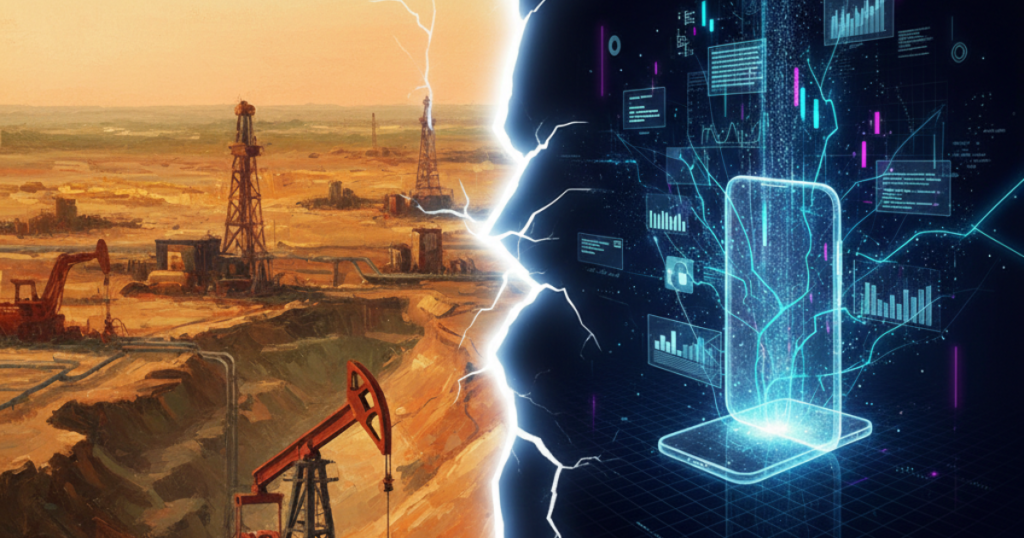
How Technology Made Humans into Commodities
The technology platforms of Instagram, YouTube, Netflix and LinkedIn have completely changed the way value is created in the digital economy. In the past, production and visibility were in the hands of powerful gatekeepers. Large corporations dominated content creation, film studios dictated storytelling, and media conglomerates decided who got public attention. Access to audiences was limited and power rested in the hands of a few gatekeepers.
Today, this has completely changed. Now, anyone with a smartphone and internet access can create content, build a personal brand and reach a global audience. This has given people unprecedented freedom and opportunities. People are no longer just consumers of content; they are producers, influencers and entrepreneurs in their own right.
But this has also brought about a new reality. As technology platforms monetize engagement and attention, human identity itself becomes a commodity in the marketplace. Personal experiences become shareable stories, opinions drive engagement and even struggles get views and clicks. In this reality, life becomes content, identity becomes a brand, and human beings become marketable commodities in the attention economy of the digital world.
The Attention Economy
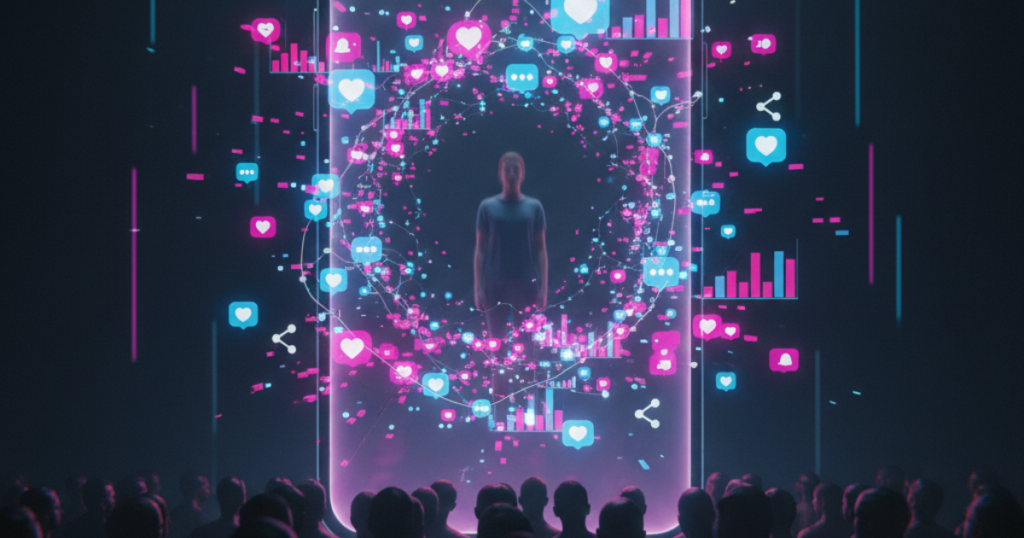
In the current digital age, attention equals money. Today, websites do not only compete for your purchasing power but also for your time. The more time you spend on a website, the more data you produce, and the more valuable you become to the system. The attention economy values engagement more than money.
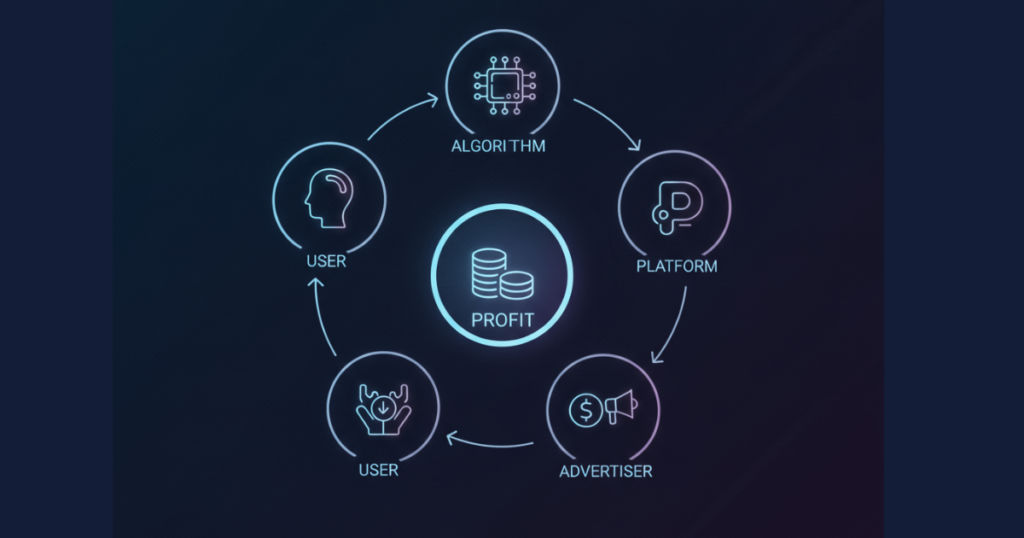
You are the one who creates your identity, and your identity is what drives the algorithms, and the algorithms drive the digital markets, and these digital markets drive profits. In the attention economy, you are both the consumer and the product.
The Impact of AI
Artificial intelligence has greatly fueled the process of converting human identity into a quantifiable economic value. AI algorithms are constantly analyzing what you are interested in, what you watch, what you buy, and how you interact with the internet. Every click, search, scroll, and pause is data that is fed into these algorithms. These algorithms use predictive analytics to analyze your interests, forecast your behavior, and tailor the content you see. In this manner, AI systems enhance the mechanisms of the attention economy by converting human behavior into valuable insights.
However, AI also has a profound impact on content creation. Generative AI applications assist individuals in writing posts, editing videos, creating visuals, and automating communication. Storytelling has become quicker, more efficient, and more optimized for engagement. This has made it easier for people to create content while also making it more competitive.
In this manner, we are now living in a digital world where identity is constantly being measured, optimized, and refined for performance. Human expression is no longer personal but data-driven. In the world of AI, identity is not only defined by who we are but also by how algorithms interpret and monetize our behavior.
Is This Empowering or Exploitative?
There are definite advantages:
- Democratization of media
- New job opportunities
- Rise of creators and influencers
- Personal branding as economic power
However, there are also potential downsides:
- Loss of privacy
- Need to perform constantly
- Emotional exhaustion
- Use of personal life as a public product
The distinction between living and branding is becoming increasingly blurred every day.

The Big Question
If the self has become the newest global commodity, more renewable than oil and more scalable than gold, then the big question is not whether this trend will continue. It will. The digital economy is already organized around identity, attention, and data as its new drivers.
The big question is whether we will control our digital selves or whether our digital selves will be controlled by algorithms and markets. In a world of streaming media, social media, and artificial intelligence, the most valuable resource may not be technology but the human story that drives it.
Conclusion
We are on the threshold of a world in which identity is a resource, story is currency, and attention is profit. The digital economy has transformed the way value is created, with human experience, personal data, and online behavior at the heart of economic transactions. What we share, how we interact, and what we tell is now worth something in the market.
The mineable self is the new commodity that is emerging. As technology advances, we are all part of a system in which identity is not only articulated but also monetized. The question that lies ahead is not how we can avoid this, but how we can navigate this reality.
Frequently Asked Questions
1️⃣ What is the mineable self?
The “mineable self” refers to the process by which digital platforms extract economic value from human identity, attention, personal data, emotions, and online behavior. In the digital economy, individuals themselves become a resource that can be analyzed, monetized, and optimized for profit.
2️⃣ How are humans becoming digital commodities?
Humans become digital commodities when their personal stories, opinions, behaviors, and attention are turned into monetizable assets. Social media platforms and AI systems use this data to drive advertising, engagement, and digital markets, making individuals both consumers and products.
3️⃣ What is the attention economy?
The attention economy is a system where human attention is treated as a scarce and valuable resource. Platforms compete for user time and engagement because more attention leads to higher advertising revenue and greater economic value
4️⃣ How does artificial intelligence contribute to the mineable self?
Artificial intelligence analyzes user behavior, preferences, and interactions to personalize content and advertisements. AI helps platforms measure, predict, and optimize human identity and engagement, accelerating the monetization of personal data.
5️⃣ Is the mineable self-empowering or exploitative?
The mineable self can be both empowering and exploitative. It allows individuals to build personal brands and create economic opportunities. However, it may also lead to privacy concerns, emotional exhaustion, and pressure to constantly perform online.
6️⃣ Why is identity considered a new global commodity?
Identity is considered a new global commodity because personal stories, opinions, and digital behavior now generate measurable economic value. Unlike physical resources, human identity is renewable and scalable through digital platforms and AI technologies.
7️⃣ Can individuals control their digital identity?
Yes, individuals can control their digital identity by managing privacy settings, being mindful of shared content, building intentional personal brands, and understanding how platforms monetize data. Digital awareness is key in the attention economy.