

Why learn digital marketing in 2026?
“Is it too late to learn digital marketing?” is one of the most common doubts we hear — usually from someone who’s watched the field for a few years and assumes the window has closed. It hasn’t. What’s changed in 2026 isn’t that the opportunity shrank — it’s that the entry point shifted, and understanding how it shifted is exactly why this is a good year to start, not a late one.
The field didn't mature — the toolset did
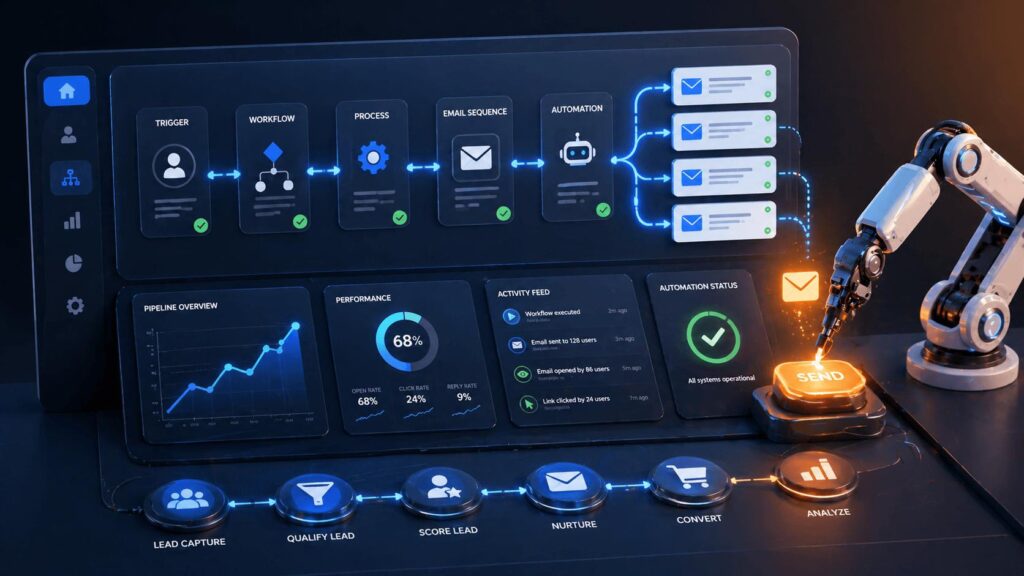
Every year someone says digital marketing is “saturated.” What’s actually happened is that the basic, easily-automated tasks — writing a first-draft caption, pulling a routine report, testing ad variations — are increasingly handled by AI. That’s not bad news for a beginner starting now; it’s an advantage. You’re not learning a decade of legacy, manual workflows just to unlearn them. You’re learning the field as it actually works today, with AI as a default tool rather than a bolt-on skill you pick up later.
Marketers who started 5–10 years ago are having to retrain around AI. Marketers starting in 2026 learn it as the baseline from day one. That’s a genuine head start, not a disadvantage.
Hiring has shifted from pedigree to proof

Traditional marketing roles historically gated on a business degree or an MBA. Digital marketing never fully did — and in 2026, that gap has widened further. Employers increasingly hire based on a demonstrable portfolio: a campaign you ran, a page you optimised and ranked, an ad account you managed, results you can show in a screenshot.
This matters most if you don’t have a “traditional” background. Career switchers, non-commerce graduates, and people without a marketing degree aren’t at the disadvantage they’d face in most other white-collar fields — as long as they can build and show real work.
There are simply more channels than there used to be
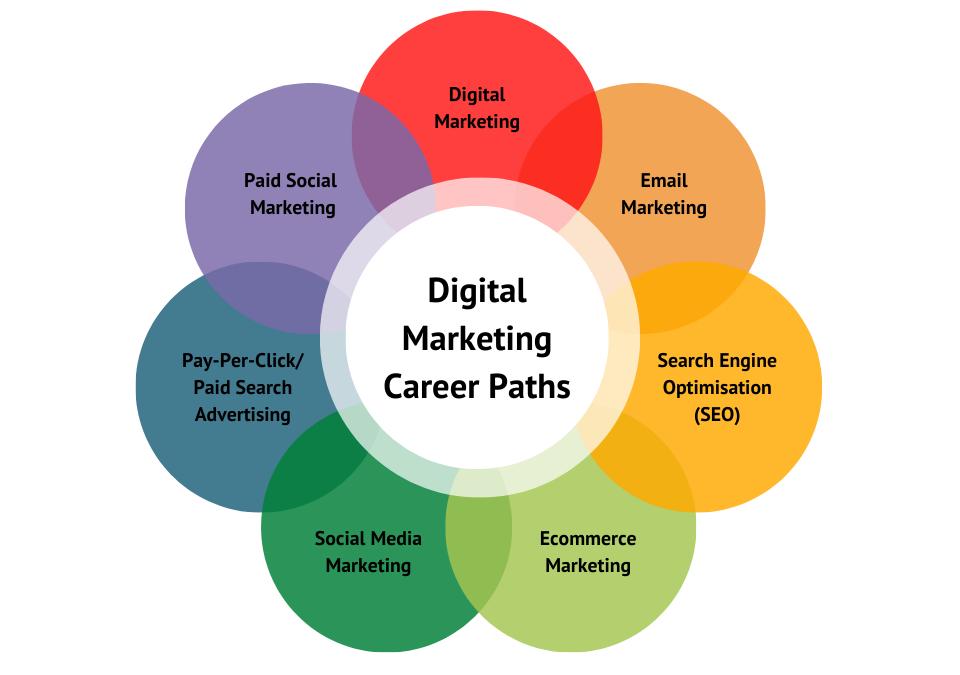
A decade ago, “digital marketing” mostly meant search and a bit of social. In 2026, the channel list has multiplied — short-form video, AI-driven ad platforms, marketing automation, conversational commerce, influencer partnerships, retail media. More channels means more specialisation opportunities, and more roles for people who can operate even one or two of them well. Breadth was once the safe bet; today, depth in a specific channel (say, performance marketing on Meta, or technical SEO) is often the faster route to being genuinely hired for, not just trained in.
The cost of starting is lower than almost any other skilled career path
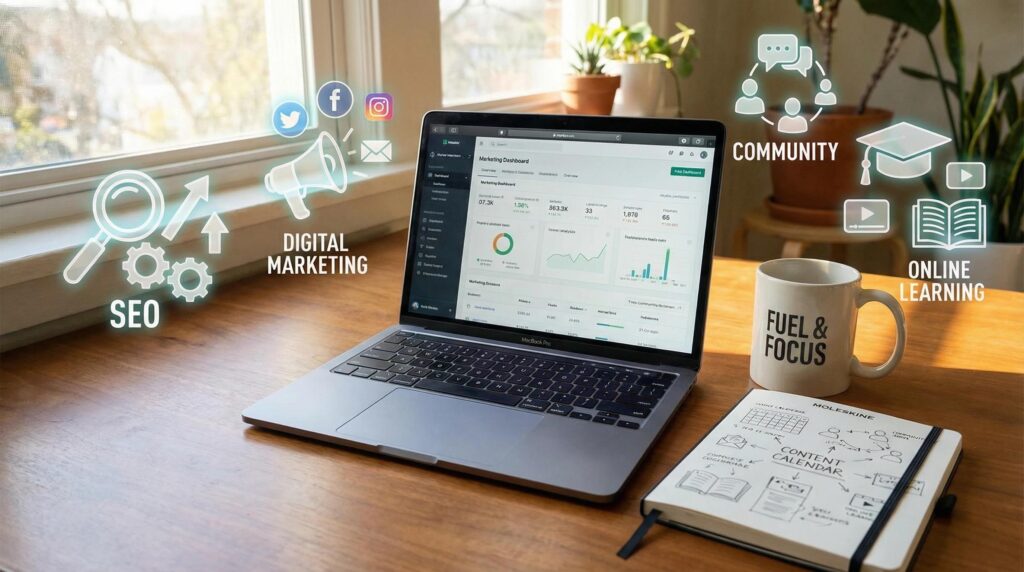
You don’t need expensive equipment, a licence, or years of unpaid apprenticeship to begin practising digital marketing. A laptop, a small ad budget, and a willingness to run real (even small) campaigns is enough to start building a portfolio — something few other in-demand career paths can say. Compare that to the capital or years required to break into most other specialised fields, and the barrier to entry looks unusually low for the earning potential on the other side.
Waiting doesn't reduce the learning curve — it just delays it
The most common reason people delay is a version of “I’ll start once things settle “down”—once AI tools mature, once the platforms stop changing so fast. They won’t. Constant platform change isn’t a temporary phase digital marketing is passing through; it’s a permanent feature of the field, the same way it’s a permanent feature of software engineering or any other technology-driven career. The skill that actually matters isn’t “knowing today’s tools perfectly”it’s building the habit of adapting quickly. That habit is best built by starting now, not by waiting for a stable moment that never arrives.
What "learning digital marketing" should actually mean in 2026
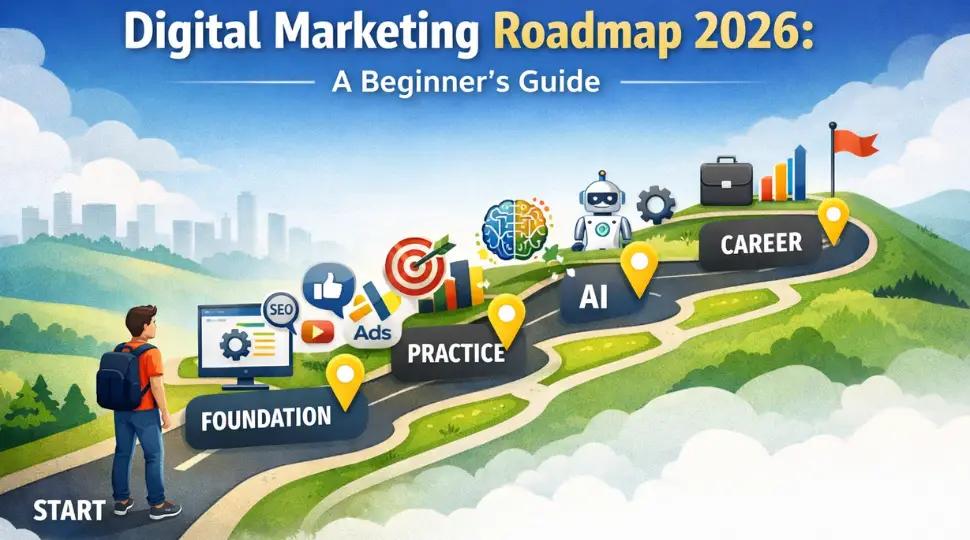
To be genuinely job-ready, not just certificate-ready, a 2026-relevant path should cover:
– Core channels — SEO, Google Ads/SEM, and organic + paid social, not just one in isolation.
– Analytics fluency — GA4 and Google Tag Manager specifically, since these are the current industry standard.
– AI tools as a working habit—prompt engineering and AI-assisted content and campaign workflows, not as an afterthought module.
– A real portfolio — live projects, not just recorded lecture completion.
If you’re evaluating specific institutes against this bar, our companion post — [how to choose the best digital marketing institute in Delhi]— walks through exactly what to check before enrolling anywhere.
The honest bottom line
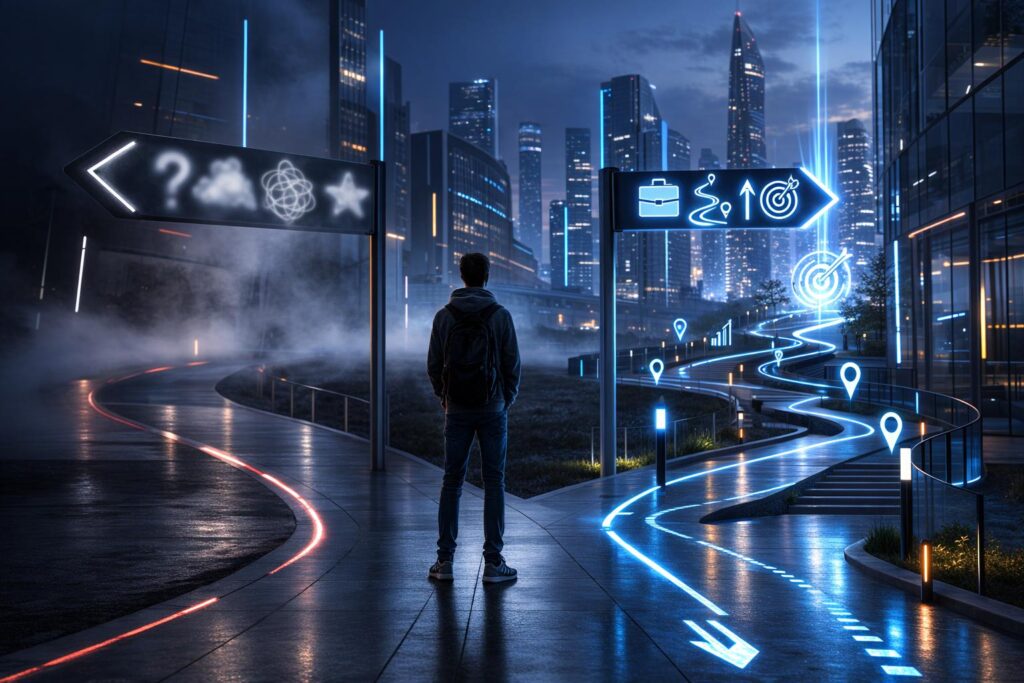
2026 isn’t a uniquely perfect year to learn digital marketing — no single year ever is. But the specific claim that “it’s too late” doesn’t hold up: the entry barrier is still low, AI is a genuine multiplier for beginners who learn it as a default rather than an add-on, and hiring continues to reward demonstrable skill over pedigree. The people who’ll struggle aren’t the ones starting now — they’re the ones who keep waiting for a moment of stability that isn’t coming.
Frequently asked questions
1. Is it too late to start a career in digital marketing in 2026?
No. The field rewards demonstrable skill and portfolio work over years of tenure or a specific degree, so a 2026 start is not meaningfully “behind” — you’re learning current tools and AI workflows as the default, not retrofitting them onto older habits.
2. Will AI make digital marketing skills obsolete?
AI is automating routine, repetitive tasks (first-draft copy, basic reporting) but expanding the overall need for people who can set strategy, judge output quality and manage campaigns end-to-end. Learning digital marketing with AI as a built-in tool, rather than fearing it, is itself the advantage of starting now.
3. Do I need a marketing degree to learn digital marketing in 2026?
No. Hiring in this field is largely skills-first—a strong portfolio of real campaigns, rankings or managed ad accounts typically matters more to employers than formal marketing credentials.
4. How long does it realistically take to become job-ready in digital marketing?
This varies by course structure and your own consistency, but a well-built, hands-on program with live projects (rather than lecture-only content) is the biggest factor in getting job-ready within a reasonable timeframe. Ask any course you’re considering for its specific practical-to-theory ratio.
5. What’s the first step to start learning digital marketing?
Pick a core channel to start with (SEO or paid social are common starting points), begin a small real project — even a personal blog or a friend’s small business page — and consider a structured, hands-on course to fill in gaps faster and build a guided portfolio.
Ready to start with a structured, AI-integrated curriculum? See our [Digital Marketing course in Rajouri Garden] or [book a free demo class] to see the curriculum before you commit.